College Hills — Whittier, CA
Leak Detection College Hills Whittier, CA
We provide leak detection College Hills Whittier homeowners trust for older homes — pinpointing slab leaks and hidden pipe leaks non-invasively, protecting original plaster and tile while locating the break within inches.
Local focus
Why College Hills Homes Call for Careful Detection
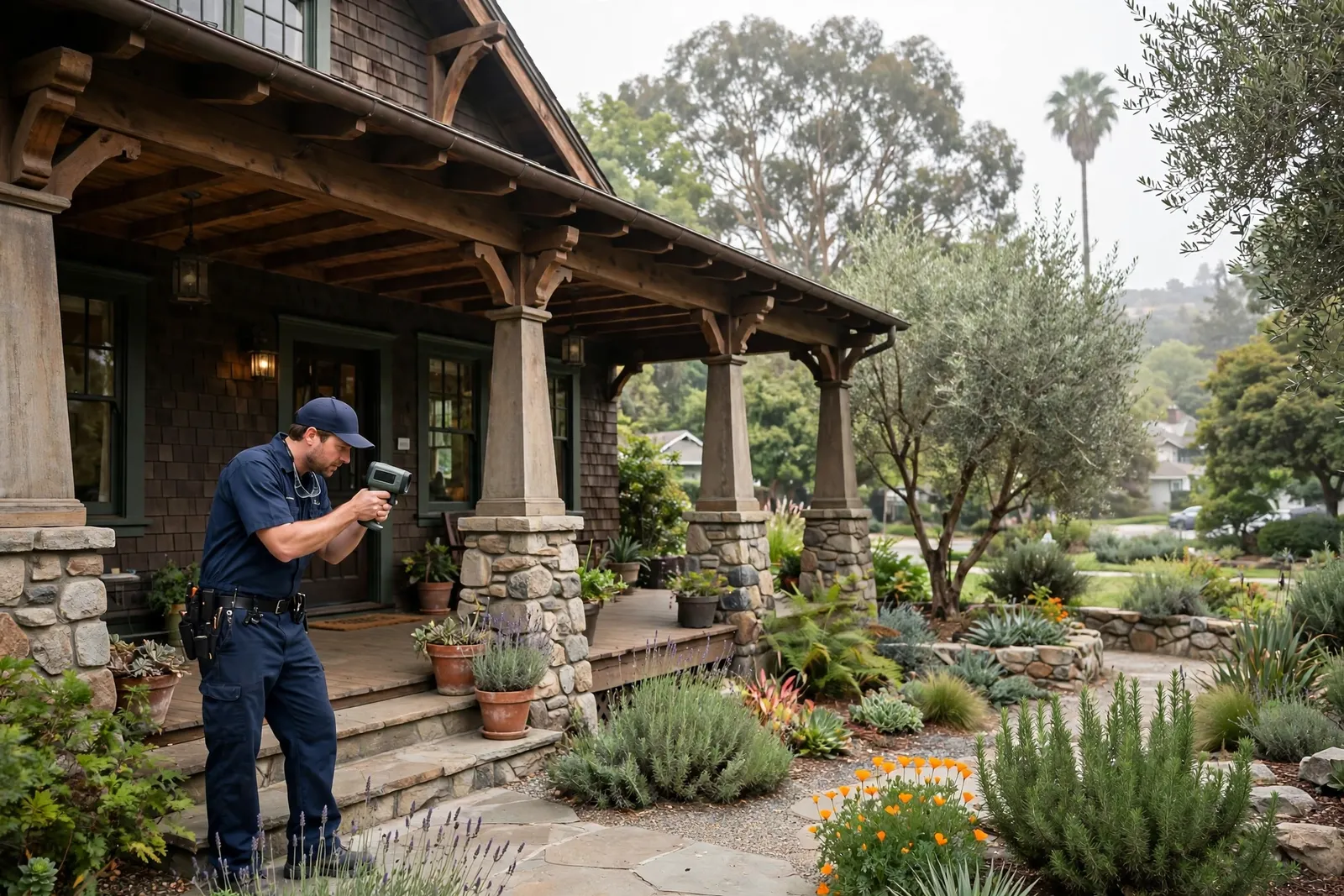
College Hills is the neighborhood around Whittier College — a designated historic district, with a small historic cluster along Earlham Drive. Many of its homes date to the pre-1940s era, and their plumbing does too: galvanized-era supply lines, early copper, and decades of repairs layered over the original work.
That layered history is exactly why detection-first matters here. Galvanized pipe typical of that era corrodes from the inside — flow narrows, pressure builds at weak points, and pinholes open where you cannot see them. Local trade sources describe this same pattern across San Gabriel Valley homes of the period: galvanized steel corroding from the interior, and copper developing pinhole leaks after five decades of service. In College Hills, those five decades are long past.
The finishes make the stakes higher. Original plaster, vintage tile, and hardwood floors cannot be replaced once they are cut open — so opening walls on a guess is the wrong move. Acoustic listening and thermal imaging work through those finishes untouched. The equipment does not care how old the wall is; it only cares where the water is.
College Hills is also quake country. The October 1987 Whittier Narrows earthquake — magnitude 5.9, Mercalli Intensity VIII in Whittier — broke water and gas mains across town. Any College Hills pipe installed before that date has already survived severe shaking, and joints stressed that day can weep slowly for decades before anyone notices.
Then there is the water itself. Whittier's supply runs hard — typically around 10 to 15 grains per gallon depending on your provider and zone — and hard water leaves mineral scale inside pipes. Scale restricts flow and creates pressure points where pinhole leaks develop, while wearing down seals, washers, and connections. At the foot of the Puente Hills, parts of Whittier also sit on potentially expansive soils: long dry summers shrink the ground, winter rains swell it back, and that annual movement works buried lines loose year after year.
Slab leak detection and water line leak detection are both available across College Hills with same-day response.
How it works
How We Pinpoint Leaks in College Hills Homes
We confirm the leak exists before we hunt for it. Every College Hills visit follows the same sequence:
1. History and meter check. We start with what you have noticed, then run the definitive test: everything in the house off, then watch the water meter. If it is still moving, water is going somewhere it should not.
2. Pressure isolation. A static pressure test on each line tells us whether you are losing water — and whether it is the hot side, the cold side, or a drain line. In older College Hills homes with several generations of pipe, this step keeps us from chasing the wrong system.
3. Acoustic listening. Sensitive ground microphones trace the hiss of pressurized water escaping along the suspected run, narrowing the search to a small area.
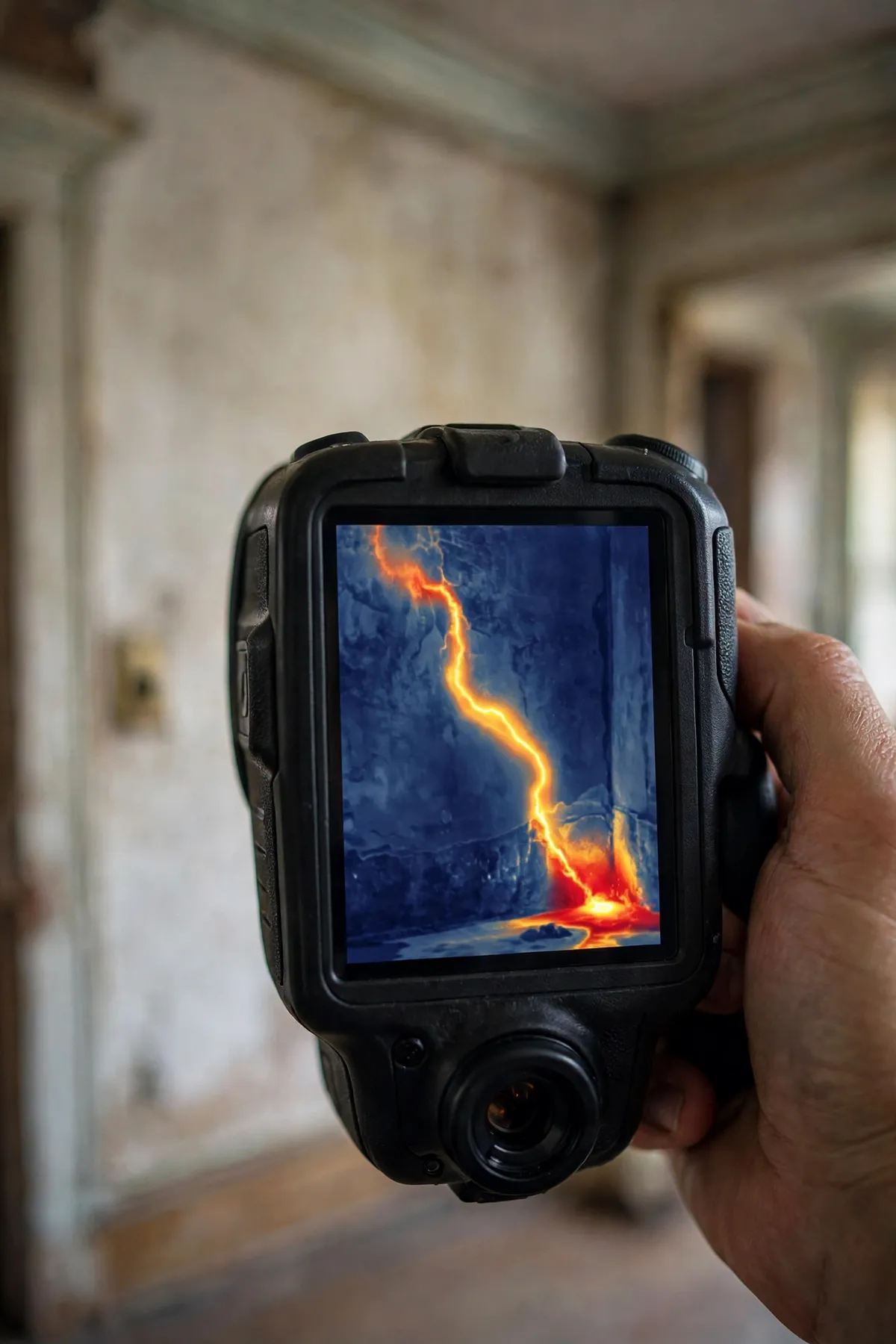
4. Thermal imaging. For hot-side leaks, an infrared scan shows the heat signature spreading through slab or wall — visible proof of the leak's path before anything is opened.
5. Mark and document. The leak location gets marked within inches, and you get written findings with the readings — documentation your plumber or insurer can work from.
Common College Hills calls: pinhole leaks in aging copper behind bathroom walls, slab-adjacent leaks where later additions meet the original foundation, failing fixture shutoffs that have not been touched in thirty years, and unexplained jumps in the water bill. If water is surfacing fast or flooding, skip the detective work and head straight to emergency leak repair.
We serve all of College Hills and the surrounding Whittier neighborhoods — see our full list of service areas, or request service directly.
Common questions
College Hills FAQs
They get more pipe failures generally. College Hills is one of Whittier's designated historic districts, so its housing stock runs older than most of the city — more decades on the original supply lines. Galvanized-era pipe typical of pre-1940s homes is well past its comfortable lifespan now, which means more pinhole leaks, more failing fixture shutoffs, and more slab-adjacent leaks where later additions meet the original foundation.
That is exactly what non-invasive detection is for. Acoustic listening and thermal imaging work through floors and walls without opening anything. In College Hills homes with original plaster, vintage tile, or hardwood worth preserving, pinpoint accuracy matters even more — and that is what the equipment delivers.
Typically $200-$600 depending on the methods needed. Older homes sometimes need an extra step — like tracing which of several generations of pipe is actually leaking — but the detection price is confirmed up front before we start.
The meter test is the definitive check: turn off everything in the house, then watch the water meter. If it is still moving, water is going somewhere it should not. Other signs include an unexplained jump in your water bill, warm spots on the floor, a musty smell in plaster walls, or the faint sound of running water when nothing is on.
Yes. We serve all of College Hills — including the historic cluster along Earlham Drive and the streets around Whittier College — plus every surrounding Whittier neighborhood. Same-day response is available across the area.
College Hills Leak? Get It Located Right.
Non-invasive leak detection for College Hills' historic homes — pinpointed within inches, priced up front.