Whittier Commercial Leak Specialists
Commercial Leak Detection Whittier, CA
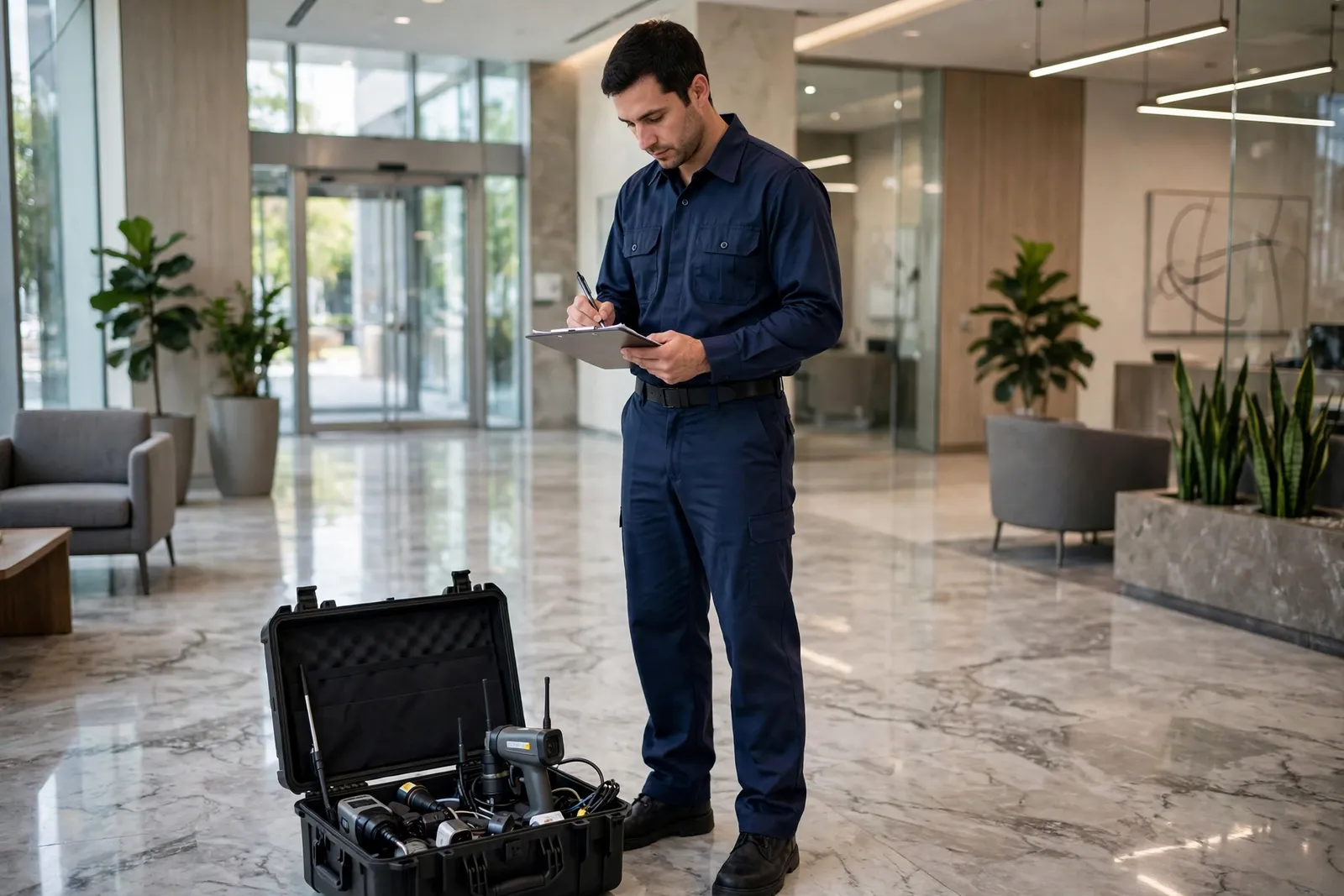
A hidden leak in a commercial building costs more than the water it wastes — it lands on the utility bill, in tenant complaints, and sometimes in a liability claim. We bring commercial leak detection Whittier property managers can schedule around their tenants — evenings and weekends included — pinpointing the source with acoustic listening and thermal imaging while your business stays open.
- After-hours and weekend scheduling — zero lost business hours
- Restrooms, kitchens, irrigation, risers, and slab lines checked
- Written findings with photos for managers and insurers
Commercial process
How We Pinpoint Leaks Without Shutting Your Business Down
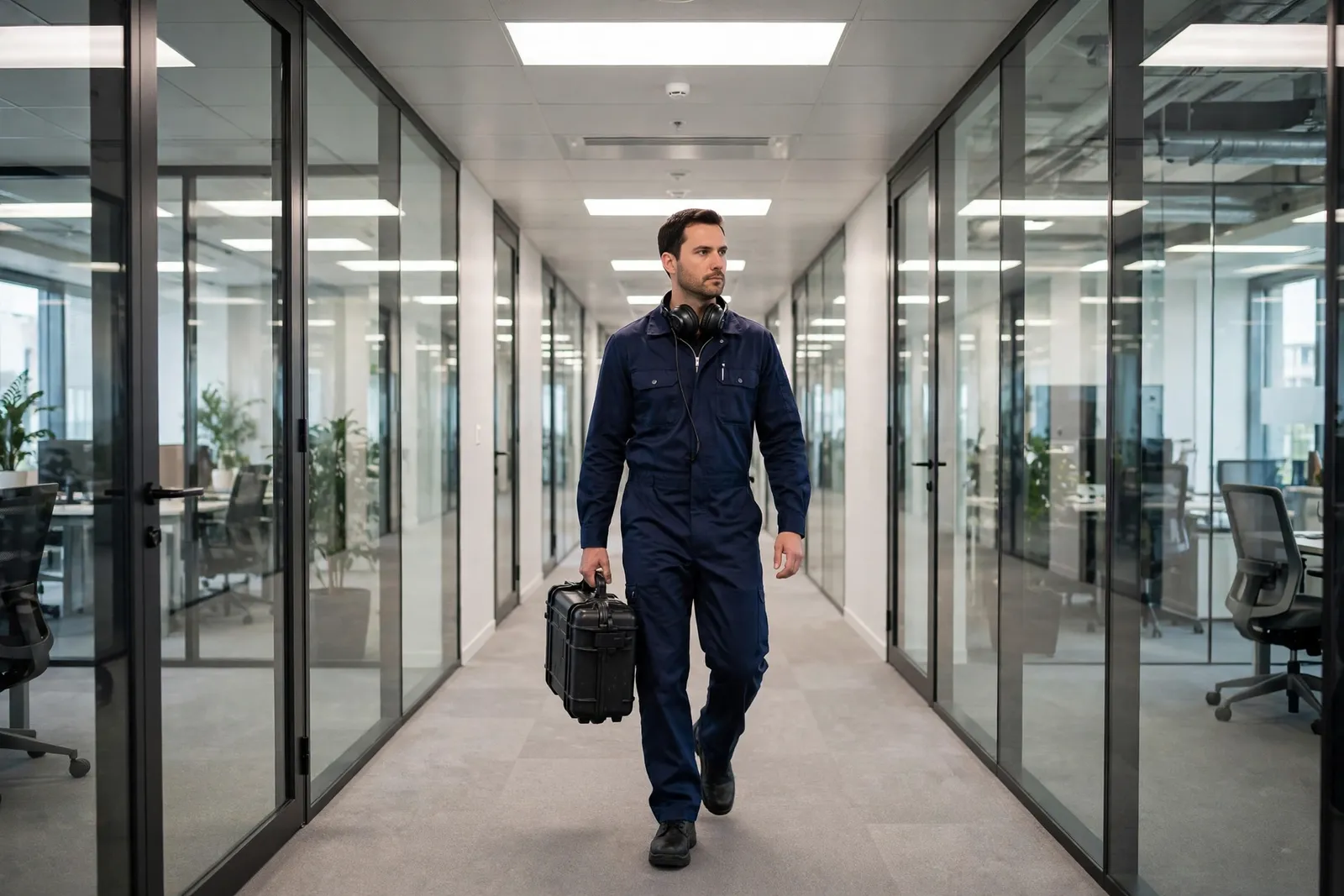
A commercial detection visit maps the building’s water zones first, then isolates and tests them one by one — usually after hours — so the business never has to close its doors. Here is how a typical visit runs, step by step.
Step 1 — Walk the building and read the meter. We start at the meter with everything off. If it is moving, water is escaping somewhere. Then we walk the building: restrooms, kitchens and prep areas, mechanical and riser rooms, irrigation valves, roof drains, and any slab-on-grade sections — noting stains, warped flooring, warm spots, and musty drop ceilings. One note on riser rooms: we check the area around fire line risers for signs of water, but we do not work on fire suppression systems themselves — that is licensed fire-protection territory.
Step 2 — Isolate by zone. Commercial buildings are plumbed in zones, and that is our advantage. We shut valves section by section and watch the meter and pressure gauges. When the loss stops, the leak is narrowed to one zone — sometimes one restroom bank or one irrigation lateral — before any listening equipment even comes out. In a multi-tenant building, this also tells us exactly whose space needs access.
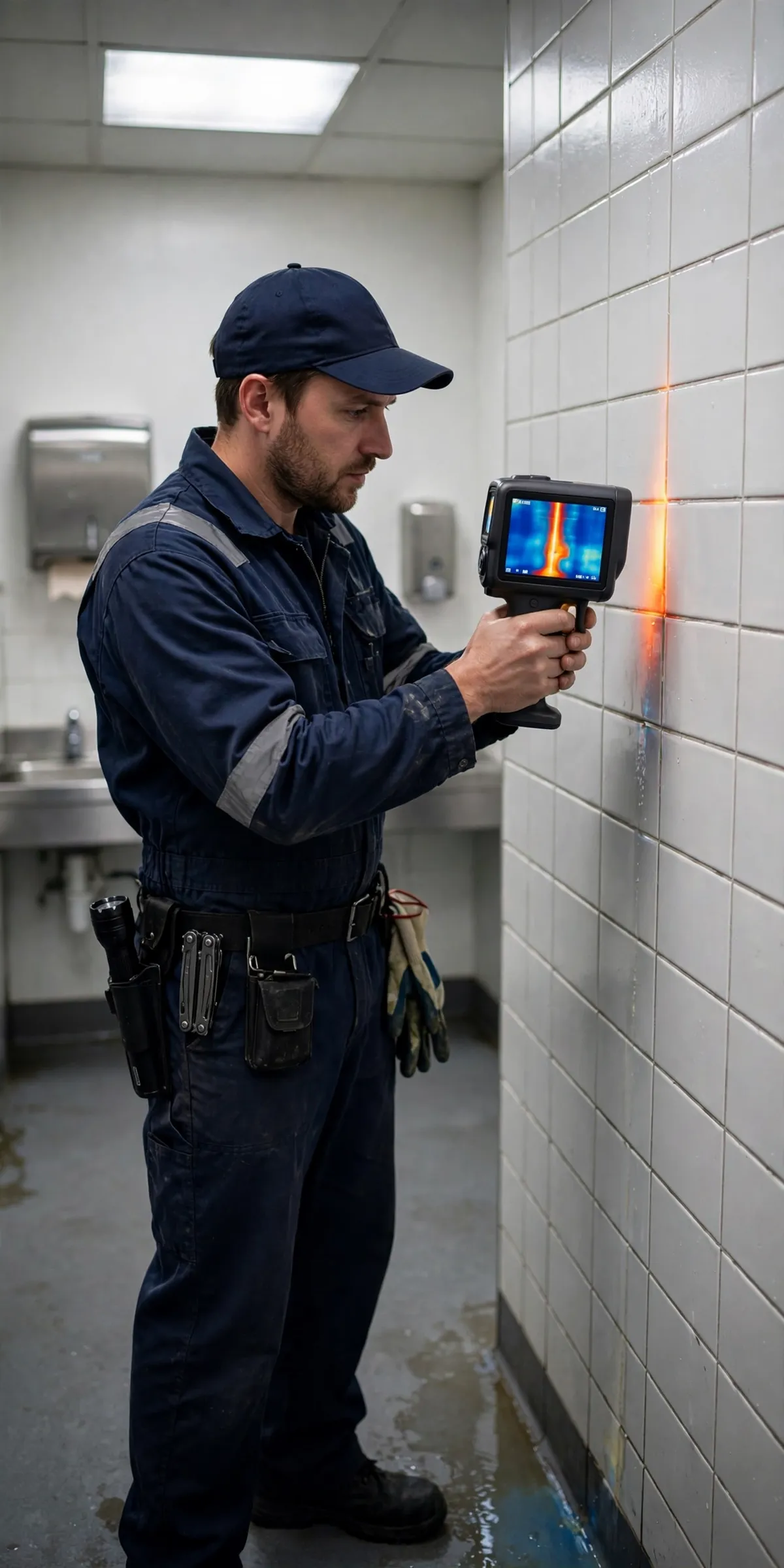
Step 3 — Listen and scan. Acoustic ground microphones pick up the hiss of pressurized water through slab and wall; thermal cameras catch the heat signature of hot-line leaks behind tile and drywall. In a working building this usually happens after hours, when ambient noise is lowest and the signal is cleanest — a quiet building gives us the sharpest readings.
Step 4 — Mark it and document it. The leak gets marked on the floor or wall, photographed, and written up with the methods used and the readings taken. You get findings you can hand to your repair contractor, your property manager, or your insurance adjuster — and a repair price before anything is opened. Buildings on slab foundations get the same acoustic treatment described in our slab leak detection service.
Why Whittier commercial buildings leak the way they do: much of the retail and office stock along Whittier Blvd and Greenleaf Ave went up decades ago — and any commercial building standing before October 1987 rode out the Whittier Narrows earthquake’s severe shaking, which broke water and gas mains across the area. Add hard local water — typically 10–15 grains per gallon depending on provider and zone — scaling pipe interiors and stressing joints, plus the Puente Hills clay’s annual shrink-swell cycle working on buried lines, and you get the slow-developing leaks we find most often: pinholes in aging copper, tired galvanized lines, and irrigation laterals cracked by ground movement.
The business case
Why a Small Leak Costs a Business More Than a Home
A commercial leak multiplies every cost a homeowner faces — and adds ones homes never see: tenant complaints, lost business hours, and liability exposure. Finding it early is always the cheaper option.
What a hidden leak costs a business
- Water bills that climb month after month with no change in usage
- Tenant or customer complaints — and reviews that outlive the leak
- Slip-and-fall exposure from wet floors in public areas
- Mold growth inside wall cavities and above drop ceilings
- An after-hours emergency repair that costs far more than a planned visit
What a detection visit gives you
- Leak located within inches — repairs open one spot, not the whole floor
- Evening and weekend scheduling around your business hours
- Zone-by-zone isolation, so only the affected area needs access
- Written findings with photos and readings for insurance and management
- A clear repair price approved before any work starts
If water is already pouring — a burst supply line, a failed water heater, a riser leak — don’t wait for a scheduled visit. Our emergency leak repair runs around the clock. We cover commercial properties across the Whittier area — see our service area.
Common questions
Commercial Leak FAQs
Yes — evenings and weekends are the standard booking for commercial work. Most business owners don’t want a technician sweeping the sales floor mid-day, so we schedule detection for after closing or before opening. You or a keyholder just needs to provide access; the business doesn’t have to shut down during operating hours.
Offices, retail storefronts, restaurants, apartment buildings, HOAs, churches, and schools — any commercial property in the Whittier area with a hidden water leak. Multi-tenant buildings are common: we isolate the leak zone by zone, so only the affected area needs access instead of the whole building.
That’s the entire point of detection-first service. Acoustic listening, thermal imaging, and pressure testing locate the leak through floors, walls, and slabs — no exploratory demolition. Anything opened afterward is a small, marked spot for the repair itself, and you approve it first.
Written findings with the leak location marked and photographed, the detection methods used, and meter and pressure readings where relevant. Property managers use the report to approve repairs and file insurance claims — it gives your adjuster something concrete instead of a verbal description.
Commercial visits typically run $400–$1,200 depending on building size, access, and how many zones need isolating — a single retail unit lands on the lower end, a multi-story or multi-tenant building on the higher end. Repairs are quoted separately, and you always approve the price before any work starts.
A sudden jump with no change in usage is the most common sign. First check the obvious: running toilets, irrigation stuck on, a hose bib left open. If none of those explain it, read your meter with everything off — if it’s still moving, water is going somewhere it shouldn’t, and that’s when detection earns its keep. Note that Whittier is served by several different water providers, so check your own bill to see which one meters your building.
Suspect a Leak at Your Business?
Hidden water costs Whittier businesses every month it runs. Get business leak detection on your schedule — located within inches, documented for your insurer, priced up front.