Locally Owned & Operated
About Whittier Leak Detection Pros
A locally owned leak detection company serving Whittier, California — built around one belief: you should never have to tear up your home to find a leak.
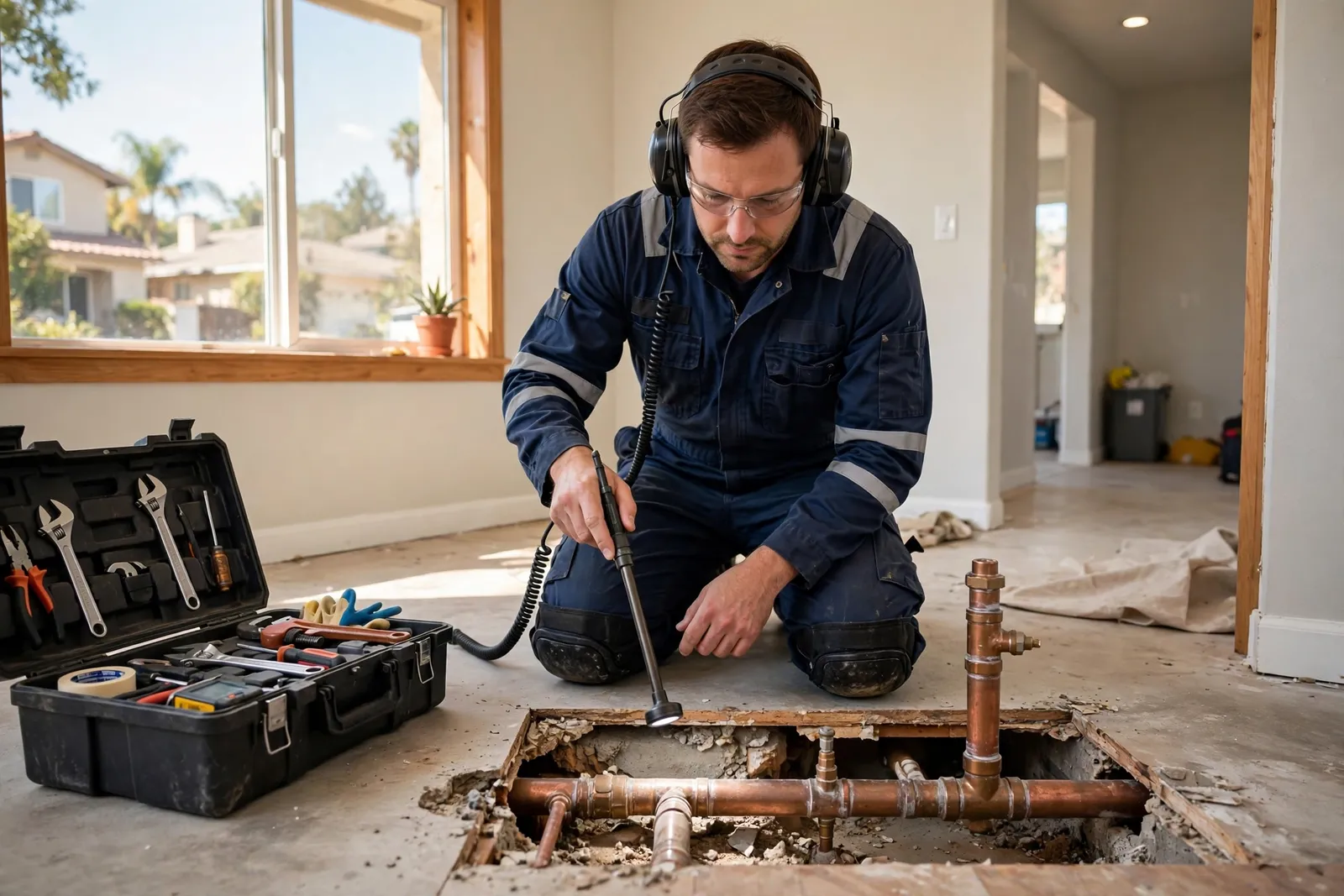
Who we are
Detection-First, Because Demolition-First Is Wrong
Most plumbing companies treat leak detection as a sideline — a quick look before the real work of cutting concrete. We flipped that around. Finding the leak precisely is the real work. Everything else — the repair, the patch, the reroute — gets cheaper, faster, and less destructive when the location is exact.
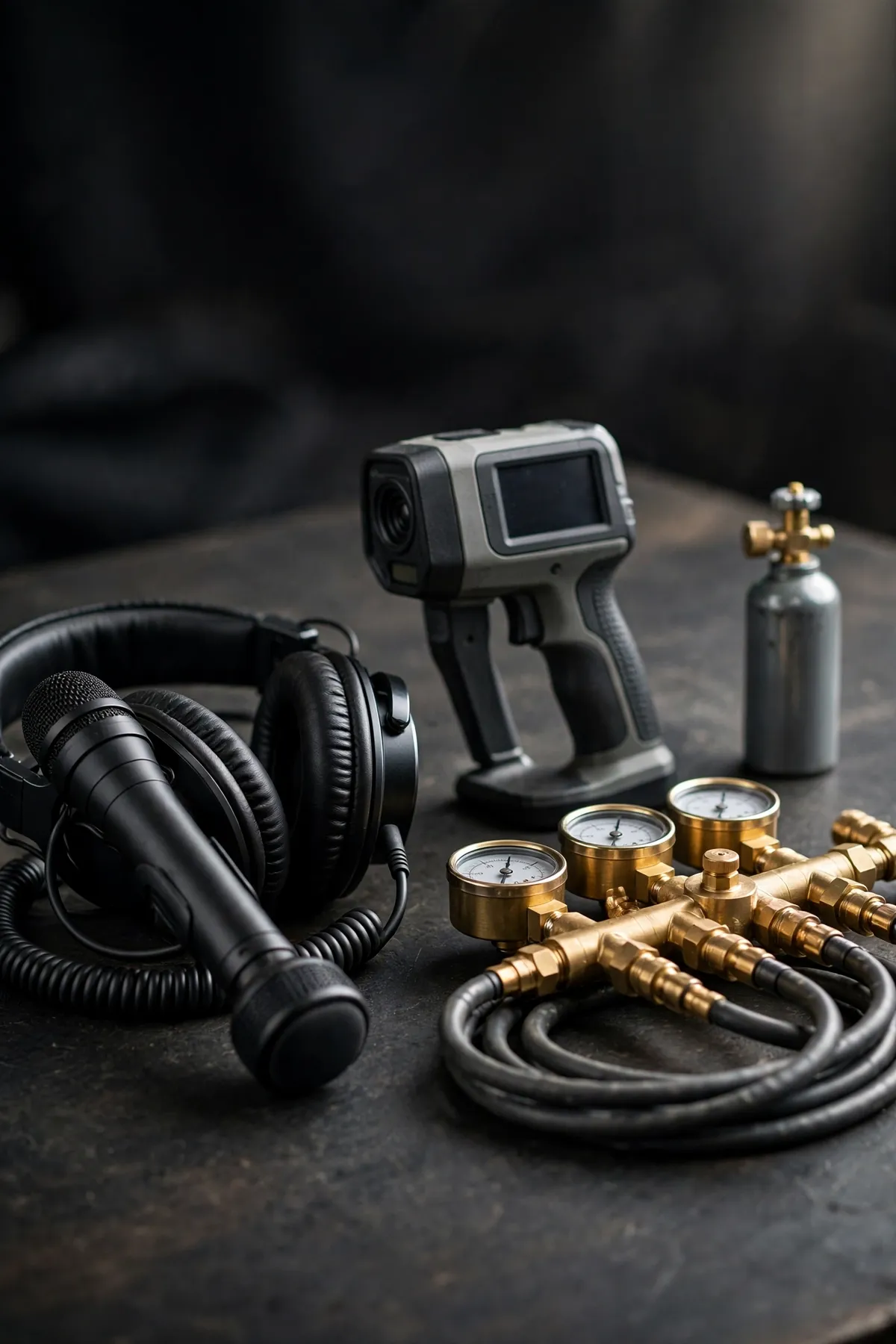
That is why our trucks carry acoustic ground microphones, thermal imaging cameras, pressure testing rigs, and tracer gas equipment — not just jackhammers. In Whittier's 1950s–1970s housing stock, where slab leaks are a pattern rather than a surprise, the difference between "somewhere under the living room" and "eighteen inches from the hallway wall" is the difference between a surgical repair and a renovation.
We are licensed, locally owned, and based right here in Whittier — not a national chain routing calls through a call center. When you call (562) 450-1003, you reach people who know these streets, these pipe systems, and these failure patterns.
That local knowledge is specific: which blocks of Uptown still run original galvanized, which Friendly Hills tracts hide 1960s copper under slab, how the Puente Hills clay moves between dry summers and winter rain, and what the 1987 quake did to pre-1988 joints. Leak patterns in Whittier are not random — they follow the age of the pipe, the soil under it, and the water running through it.
How we work
Diagnose before we quote
Pressure tests and listening first. We prove where the leak is before talking repair prices.
Show our work
Marked locations, meter readings, thermal images — you see what we see.
Price it in writing
Clear written scope before any work. The detection report is yours to keep either way.
Local knowledge
Why Whittier Homes Leak the Way They Do
Leak patterns in Whittier are not random. They follow the age of the pipe, the soil under it, and the water running through it — and after years of working these streets, we read those patterns the way a mechanic reads an engine.
Housing eras, pipe eras
Pre-1940s homes in Uptown's historic districts still run original galvanized steel supply lines in many cases — pipe that was never meant to last this long. The 1950s–1970s tracts across Friendly Hills, Murphy Ranch, and much of East and South Whittier sit on slab-on-grade foundations with copper water lines run under or below the slab. That copper is now 50 to 70 years old, and pinhole corrosion from the inside out is the classic Southern California slab-leak story.
Soil that moves, a quake that shifted things
Parts of Whittier sit on potentially expansive clay soils that swell with winter rain and shrink through the dry summer — that seasonal movement works buried joints loose over decades. And the October 1987 magnitude 5.9 quake broke water and gas mains across the city; pre-1988 pipe joints took shaking they were never designed for. When we trace a line, we are thinking about all of it.
Hard water, inside the pipe
Local water runs hard — in the 10 to 15 grains-per-gallon range — and hard water scales and corrodes from the inside. A line can look fine from the outside while the interior wall is thinning to paper. That is why we pressure-test and listen rather than eyeballing: the failure is usually invisible until it is not.
Know where your responsibility starts
Whittier is served by several water providers, and the meter is the boundary — the service line from the meter to your house is yours. A spinning meter with everything off is the single most useful leak test a homeowner can run, and it is the first thing we verify on arrival. Check your water bill if you are unsure who supplies your block.
None of this is guesswork about your house specifically — it is the background we bring so the testing goes faster and the answer is exact. See where we work for neighborhood-by-neighborhood detail.
How we find it
The Equipment on Our Trucks
Detection is a separate trade from repair, and it has its own tools. Here is what we bring to every job — and what each tool actually tells us.
Acoustic listening equipment
Ground microphones and correlators that hear pressurized water escaping a pipe — through concrete, soil, and walls. This is how a slab leak gets marked within inches instead of "somewhere under the living room."
Thermal imaging cameras
Hot water leaks paint a heat signature across a slab or wall that the eye cannot see. Thermal lets us map the warm-water path and narrow the dig zone before anyone touches concrete.
Pressure testing rigs
Static pressure tests on isolated lines prove whether a leak exists and whether it is on the hot side, the cold side, or a drain line. No assumptions — a gauge reading is a fact.
Tracer gas
For the stubborn ones: a safe hydrogen-nitrogen mix is introduced into the line, and a sniffer follows the gas escaping at the break — even through slab and soil where acoustics struggle.
Sewer cameras
Drain-side problems get eyes, not guesses. A camera run shows breaks, offsets, bellies, and root intrusion in the line — recorded, so you can see exactly what we see.
Every visit ends with the same thing: a marked location, meter readings, and a written report of findings. The detection report is yours to keep either way — whether we do the repair or you hand it to another contractor. Learn more about our slab leak detection and water line leak detection process.
Work With a Local Detection Team
Call (562) 450-1003 or request service online.