Slab Leaks
Pinpoint leaks under your concrete slab with acoustic listening and thermal imaging — no jackhammer guesswork, no exploratory holes.
Slab Leak Detection in Whittier, CA →ZIP 90605 — Friendly Hills
Friendly Hills' 1960s ranch homes hide copper water lines under concrete slabs — and after sixty years, pinhole leaks are a matter of when. Leak detection Friendly Hills Whittier residents trust starts with a pressure test, not a jackhammer: acoustic listening plus thermal imaging pinpoints the break within inches, with no exploratory demolition.
Local focus
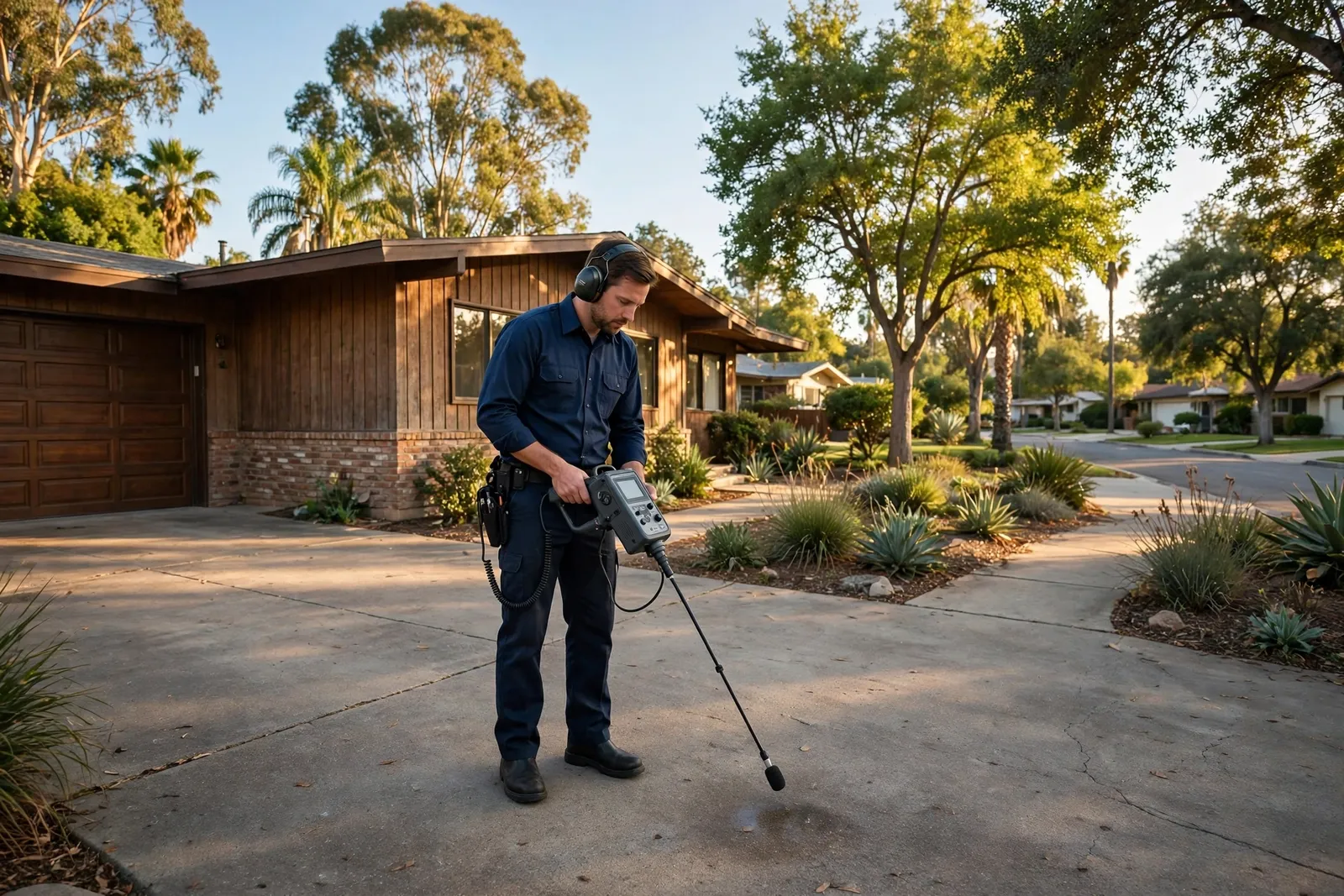
We have spent years tracing leaks through Friendly Hills, and we can tell you the neighborhood's story in one sentence: these are 1950s and 1960s ranch homes sitting on some of Whittier's most valuable ground. Friendly Hills was developed in the 1950s and 60s on the east side of town, built out alongside the Murphy Ranch and Leffingwell Ranch tracts — quiet tree-lined streets, generous lots that commonly run from a third of an acre to well over half an acre, and home prices from $1.2 million to over $3 million. Some streets hold all-original ranch homes; others hold gated estates around the Friendly Hills Country Club. Underneath, the plumbing is the same era.
Sixty-plus years old means the plumbing is original to the house — and in this era, original means copper supply lines run under a slab-on-grade foundation. Post-war Southern California tracts didn't get basements, so the concrete you walk on is the ceiling of your plumbing. Copper fails from the inside out: internal pitting opens pinhole leaks, and Whittier's water speeds the process along. Our water runs about 15 grains per gallon, and the Water Quality Association rates anything over 10.5 grains as "very hard." Hard water plus the chloramine disinfectant in the supply is the exact recipe behind copper pinhole leaks across Southern California. Many homes here also carry galvanized steel lines, corroding from the inside over roughly 40–50 years — right at or past that mark — plus cast-iron drains that fail the same way.
Two local forces work against that buried pipe. Friendly Hills backs toward the Puente Hills, and the ground at the foot of those hills carries expansive clay — soil that shrinks through nine dry months and swells with winter rain, flexing slab foundations a little more every year. And every pipe installed before October 1987 already rode out the Whittier Narrows earthquake: magnitude 5.9, severe shaking across Whittier, with documented water and gas main breaks around town. Joints that survived that shake have spent nearly four decades quietly degrading since. That is the pattern we keep finding — not a sudden burst, but a pinhole weeping under a slab for months.
The stakes run higher in Friendly Hills than in most of Whittier, because the homes do. The Insurance Information Institute reports that water damage makes up 22.6% of all homeowners insurance claims, averaging about $15,400 per claim — and on a seven-figure home, that eats straight into your equity. We would rather find the pinhole now than meet you after a flooded slab. That is what slab leak detection for Friendly Hills ranch homes is for: confirming which line is leaking and marking the break within inches, before anyone picks up a saw.
We cover Friendly Hills and the rest of 90605 — the Murphy Ranch tracts, Leffingwell Ranch, and South Whittier — with same-day response. We also run leak detection in Murphy Ranch, South Whittier, Uptown Whittier, East Whittier, and College Hills.
Our method
Nobody should cut into a Friendly Hills slab on a hunch. Our whole process exists so that if any demolition happens at all, it happens in exactly one spot — after the leak is already found. We start at the meter: with every fixture off, a meter that keeps moving is the leak's confession. Then we isolate and pressure-test the hot line and the cold line separately, so we know which one is losing water before the equipment comes out. That confirmation is what separates professional leak detection from guesswork.
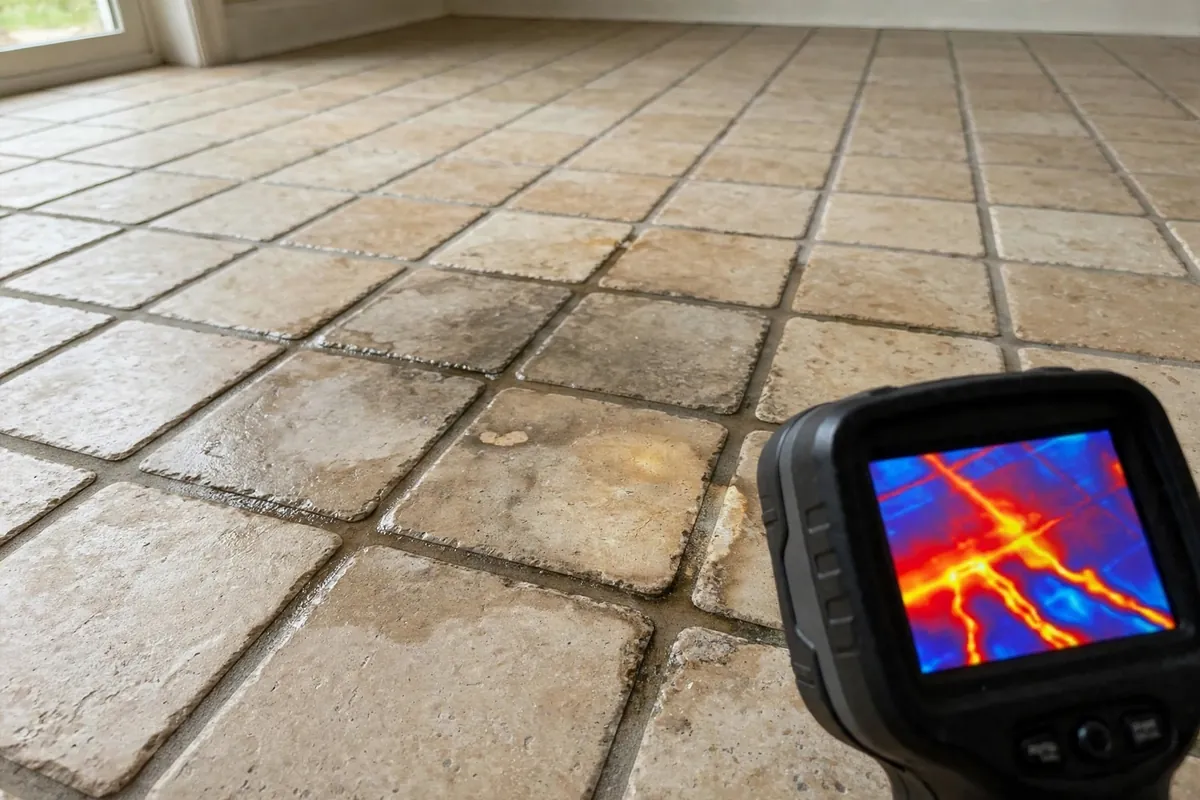
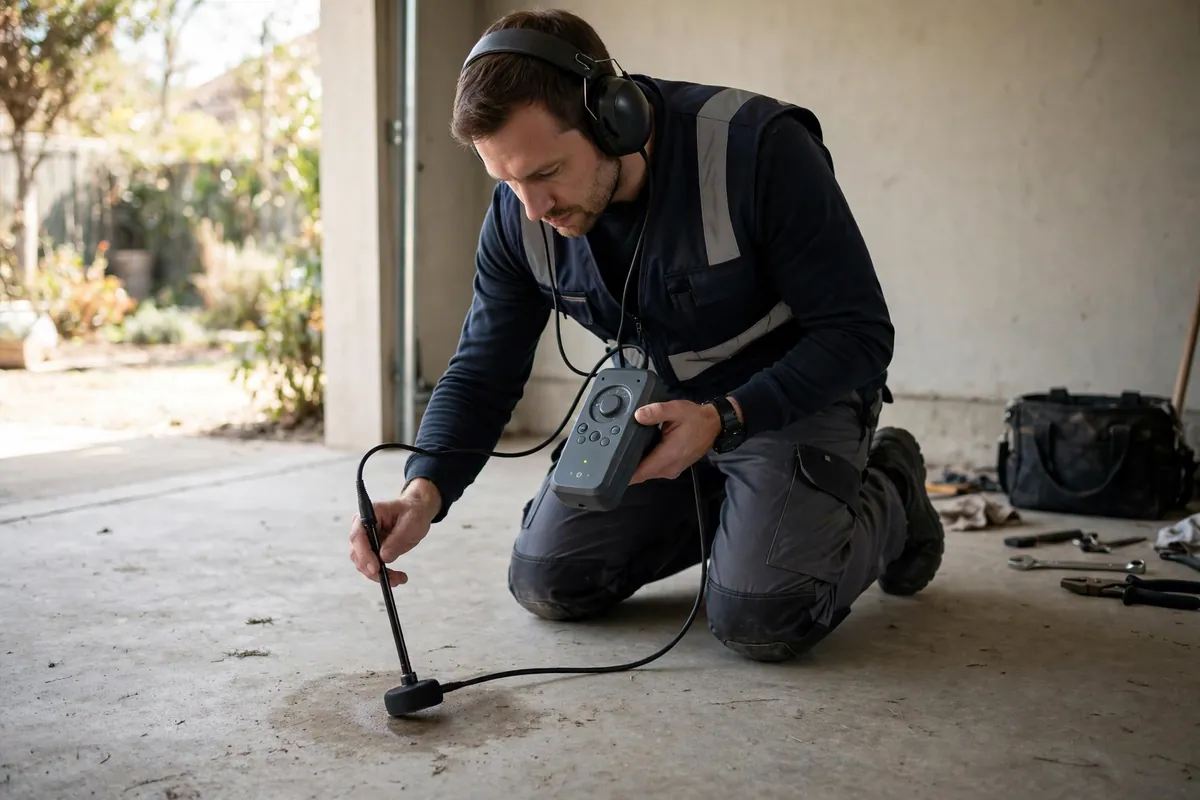
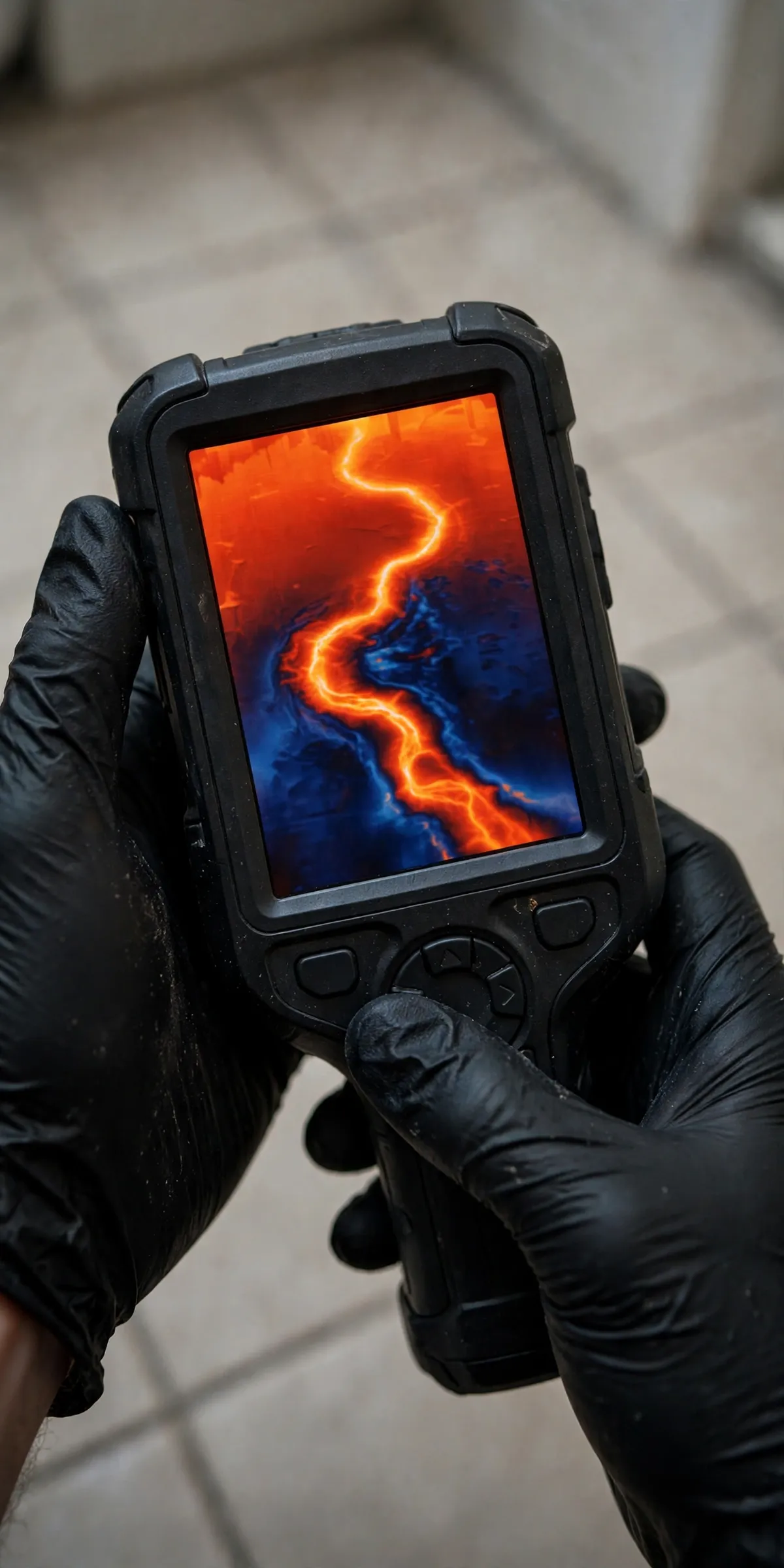
Then comes the listening. Acoustic equipment pressed to the slab hears what you cannot — leaks on metal pipe sound off in the 500–1,500 Hz range, and a trained ear reads it the way a mechanic reads an engine. Thermal imaging scans the floor for the 3–6°F temperature gradients that hidden water paths leave behind, and moisture meters map how far the dampness has spread. The readings cross-check each other, and the break gets marked within inches — the whole point of non-invasive leak detection.
For trickier cases — a buried service line from the meter to the house, or a line that only leaks under pressure — we bring in electronic location equipment; see electronic leak detection in Whittier. If the leak is in the buried line feeding the house, water line leak detection traces it from the meter to the foundation. One contractor cost guide puts it well: "Paying for precise detection is usually the cheapest money in the whole project."
What we do
Pinpoint leaks under your concrete slab with acoustic listening and thermal imaging — no jackhammer guesswork, no exploratory holes.
Slab Leak Detection in Whittier, CA →Burst pipe, major leak, water where it should not be — fast response across Whittier, day or night.
Emergency Leak Repair in Whittier, CA →Find leaks in the buried line from your meter to the house — acoustic tracing pinpoints it before anyone digs.
Water Line Leak Detection in Whittier, CA →Losing more water than the Whittier sun explains? Dye testing and pressure checks find pool and spa leaks fast.
Pool & Spa Leak Detection in Whittier, CA →Camera inspection locates breaks, offsets, and root intrusion in your sewer lateral — no guesswork, no trench first.
Sewer Line Leak Detection in Whittier, CA →After-hours service for offices, retail, restaurants, and HOAs — with documentation your insurer accepts.
Commercial Leak Detection in Whittier, CA →Pinpoint lateral lines, valves, and sprinkler head leaks with pressure testing and acoustic location — no digging.
Irrigation Leak Detection in Whittier, CA →Acoustic listening, thermal imaging, tracer gas, and pressure testing find hidden leaks without demolition.
Electronic Leak Detection in Whittier, CA →Combustible gas sniffers, pressure testing, and line tracing pinpoint the leak fast — plus what to do the moment you smell gas.
Gas Leak Detection in Whittier, CA →Watch for these
In Friendly Hills the signs read the same on every street. A warm spot on the tile or concrete that never cools — the classic hot-side slab leak, meaning the hot line is heating the floor from below. The sound of running water when nothing is on. Damp carpet or baseboards along an exterior wall. A hot-water bill that keeps climbing for no reason — California utilities use tiered, increasing-block water rates, so a leak that pushes your usage into a higher tier inflates the bill faster than the lost gallons alone would explain.
The meter test is the one you can do yourself tonight. Shut off every fixture and irrigation zone — Friendly Hills lots are big enough that irrigation systems earn their own suspicion — then watch the meter for fifteen minutes. If it moves, water is leaving your system somewhere. Do not sit on that result: mold can start on wet surfaces within 24–48 hours, and a slab leak stays wet around the clock. That is when you call for leak detection, not a jackhammer.
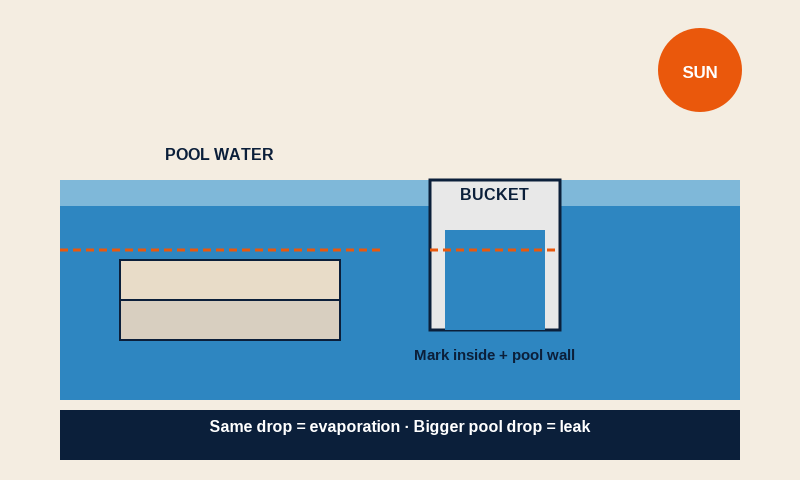
Pools earn their own mention on lots this size. Many Friendly Hills backyards have pools original to the house or added decades ago, and a pool losing more than about a quarter-inch of water a day is not evaporation — it is a leak in the shell, the plumbing, or the equipment pad. If the bucket test points at the pool rather than the house, our pool leak detection service pressure-tests the pool lines and inspects the structure the same non-invasive way.
The math
Straight answer first: nationally, professional leak detection runs roughly $150–$400, averaging about $280, according to Angi's 2026 cost data. A slab leak repair, if it comes to that, averages about $2,280, including detection (typically $630–$4,400). Those are national figures, not a quote for your house — every visit is priced up front before we start, and you approve the number before any equipment comes out.
Now the other side of the ledger. Water damage makes up 22.6% of all homeowners insurance claims, averaging about $15,400 per claim, per the Insurance Information Institute. One documented case: an $800 fix became a $22,000 repair after eighteen months of ignoring a damp patch — and because the damage was gradual, the insurance claim was denied and the homeowner "received nothing." Gradual leaks are the ones policies typically exclude; sudden failures may be covered. A dated detection report is what turns "you should have known" into a documented, sudden discovery.
A slab leak never fixes itself and never stays the same size — water under pressure enlarges the pinhole while the repair bill grows. Professional leak detection at roughly an eighth of the average repair cost is the cheapest insurance against that chain of events. When you are ready, the number is (562) 450-1003 — same-day visits across Friendly Hills and all of Whittier, and our emergency leak repair service covers active leaks around the clock.
From the blog
Straight answers on costs, warning signs, and finding hidden leaks — from our leak detection Whittier team.
Common questions
It is the era, not the neighborhood's luck. Friendly Hills was developed in the 1950s and 60s with copper water lines run under slab-on-grade foundations. Sixty-plus years of very hard water — about 15 grains per gallon — plus soil movement at the foot of the Puente Hills wear pinholes into that copper, a failure pattern common in Southern California homes from this era. Newer builds mostly run PEX or accessible piping, so they fail less and fail louder.
Isolation pressure testing first — we cap and pressurize the hot line, then the cold line, to confirm which one is losing water. Then acoustic equipment listens through the slab for the leak's sound signature while thermal imaging maps the heat pattern on the floor surface. The two readings cross-check each other, and the break gets marked within inches. No exploratory holes, no guessing. The visit usually takes one to two hours.
Warm spots on tile or concrete floors, the sound of running water when nothing is on, a water meter that moves with all fixtures off, damp carpet or baseboards along exterior walls, and a hot-water bill that keeps climbing. Any one of these is worth a pressure test — early is the difference between a pinpoint repair and a flooded slab.
Nationally, professional leak detection runs roughly $150–$400, averaging about $280, per Angi's 2026 cost data — but those are national figures, not a quote for your home. We price every Friendly Hills visit up front, and you approve it before any equipment comes out. Either way, it is small next to the average slab leak repair of about $2,280, including detection (typically $630–$4,400).
It is the biggest accelerant. Whittier's water runs about 15 grains per gallon, and anything over 10.5 grains is rated “very hard” by the Water Quality Association. Hard water plus the chloramine disinfectant in the supply pits copper from the inside — the exact pinhole-leak mechanism behind most under-slab copper failures in Southern California.
Yes — that is what isolation pressure testing is for. We cap and pressurize the hot line and the cold line separately and watch which one loses pressure, then trace that line with acoustic listening and thermal imaging. Most slab leaks we find in Friendly Hills are on the hot side, which is why the classic symptom is a warm spot on the floor.
It is one of the most reliable early warnings. California utilities use tiered water rates, so a hidden leak that pushes your usage into a higher tier inflates the bill faster than the lost gallons alone would explain. Try the meter test: shut off every fixture and irrigation zone, then watch the meter for fifteen minutes. If it moves, call us — a slab leak can burn through expensive tier-priced water for months before it ever shows itself.
Yes — all of the 90605 area including South Whittier, the Murphy Ranch tracts, and Leffingwell Ranch, plus East Whittier and Uptown. Friendly Hills homeowners can call (562) 450-1003 any time for leak detection, and we will confirm same-day availability. Anywhere in Whittier or Southeast LA County, we have you covered.
Non-invasive leak detection for Friendly Hills' 1950s–60s ranch homes — pinpointed within inches, priced up front.