Slab Leaks
Pinpoint leaks under your concrete slab with acoustic listening and thermal imaging — no jackhammer guesswork, no exploratory holes.
Slab Leak Detection in Whittier, CA →ZIP 90605 — South Whittier
Leak detection South Whittier homeowners trust starts at the meter: we confirm the leak exists, then pinpoint it within inches using acoustic listening and thermal imaging — no exploratory holes in your slab, no guesswork.
Local focus
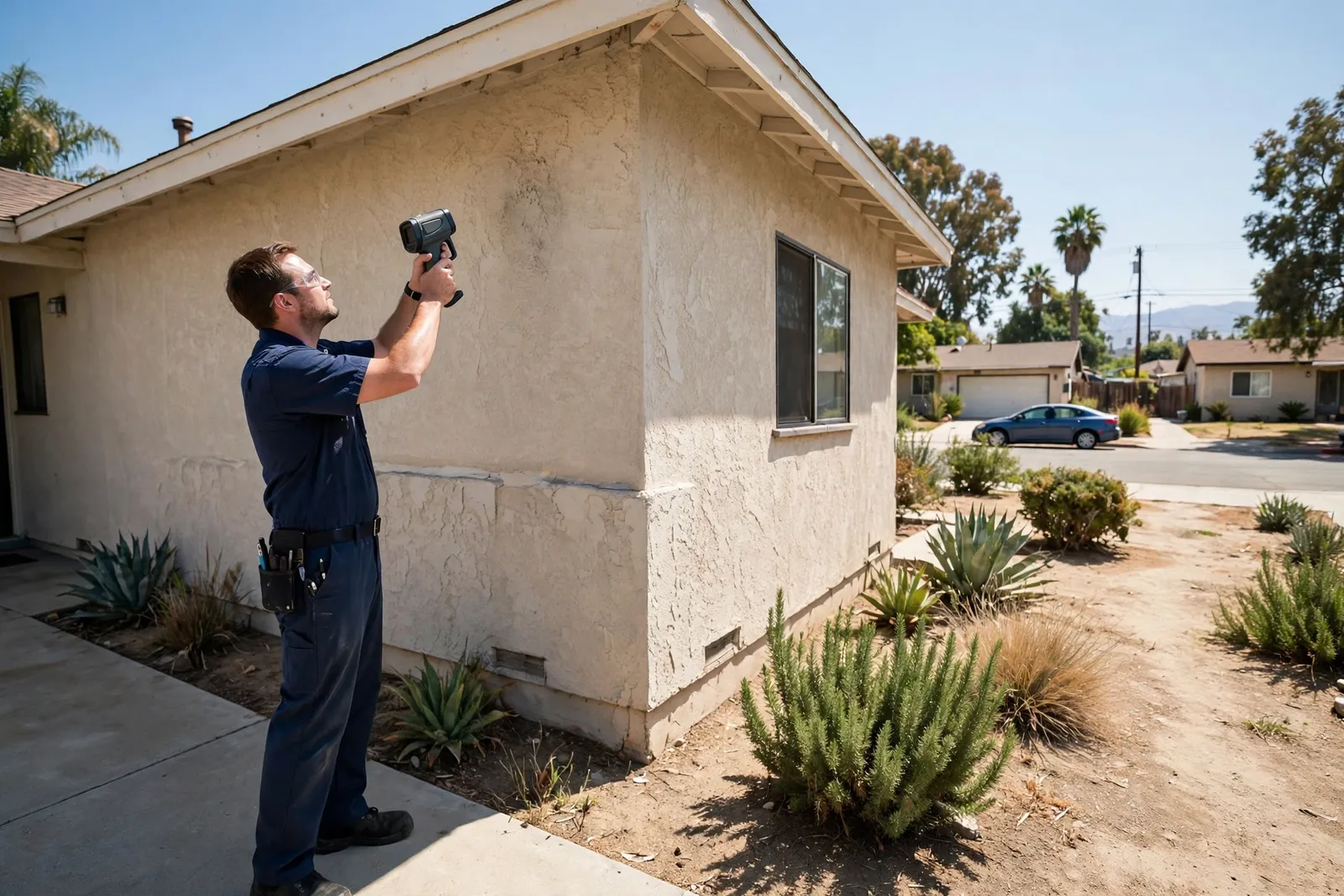
South Whittier is unincorporated — a census-designated place just south of the city proper, in southeastern Los Angeles County — The housing here is overwhelmingly 1950s–70s ranch tracts: single-story homes on slab-on-grade foundations with copper water lines run right under the concrete. That is the classic Southern California slab-leak house, and those lines are 50 to 70 years old now.
The numbers back it up. Citywide, 82.4% of Whittier’s housing stock was built before 1970 (Southern California Association of Governments, 2019 Local Profile), with the city’s housing element putting 38% of homes in the 1950s alone and 15% in the 1960s. Pre-1970 plumbing predates modern copper joining practices — and copper lines that have sat in hard, chloramine-treated water for half a century are right at the age where pinhole corrosion starts showing up.
That is why every leak detection visit we run in South Whittier starts at the water meter. With everything off, we confirm water is actually escaping, then pressure-test to isolate which line is losing it. Only then do we trace: acoustic leak detection through the slab, thermal imaging for the heat bloom of a hot-side leak, and we mark the spot within inches before anyone talks about cutting concrete. Our slab leak detection process exists so the repair opens one small area, not half the room.
Your water provider depends on the street. Orchard Dale Water District — founded in 1954, with its office on Telegraph Road — serves a portion of South Whittier, but several purveyors deliver across the Whittier area, so check your water bill if you are not sure which one is yours. And if your lot has mature trees, keep the sewer lateral in mind too: root intrusion frequently damages sewer lines in established San Gabriel Valley neighborhoods, and our sewer line leak detection covers exactly that.
We run the same detection-first approach in the neighborhoods around South Whittier too — see our pages for slab leak detection in East Whittier, leak detection in Friendly Hills, leak detection in Murphy Ranch, leak detection in Uptown Whittier, and leak detection in College Hills. The housing stock changes from block to block; the method stays the same.
Local plumbing risks
Most leaks we find in the 90605 trace back to the same three forces. None of them is the homeowner’s fault — just what happens when 1950s–70s plumbing meets Whittier’s water, soil, and history.
First, the water itself. Whittier’s supply runs around 15 grains per gallon of hardness in compiled water-quality reports — and on the Water Quality Association scale, anything over 10.5 grains counts as “very hard” water. Hard water plus the chloramine disinfectant in municipal systems is the exact recipe for copper pinhole leaks: mineral scale builds up inside the line, and pinholes eat through from the inside out.
Second, the soil. Around the Puente Hills, Whittier’s geology includes interbedded sand, silt, and clay with very low to medium expansion potential — soils that shrink through the dry summer and swell when the winter rain arrives. Whittier gets about 15 inches of rain a year, nearly all of it in winter (BestPlaces climate data), and that yearly shrink-swell cycle moves slabs and tugs at buried lines, year after year. Drain and sewer laterals feel it worst, which is why our sewer line leak detection gets plenty of use in the 90605.
Third, the 1987 Whittier Narrows earthquake. Magnitude 5.9 on October 1, 1987, with Intensity VIII shaking in Whittier — and water and gas main breaks documented across town. Any plumbing installed before that date already survived severe shaking. Joints and connections that held through ’87 have had decades since to work loose into slow, hidden leaks that only a leak detection visit will catch. Pipes that were “fine” after the quake are failing now, one pinhole at a time.
Put the three together — very hard water, moving clay soil, and quake-aged joints — and you see why leak detection work in South Whittier never slows down.
Our leak detection process
A proper leak detection visit follows the pro sequence — and it is tuned for slab-on-grade ranch homes. It starts at the meter: with every tap off, a spinning meter confirms water is escaping somewhere. Then pressure testing isolates which line is losing it — hot or cold, inside or out. Only after that do we start listening and looking.
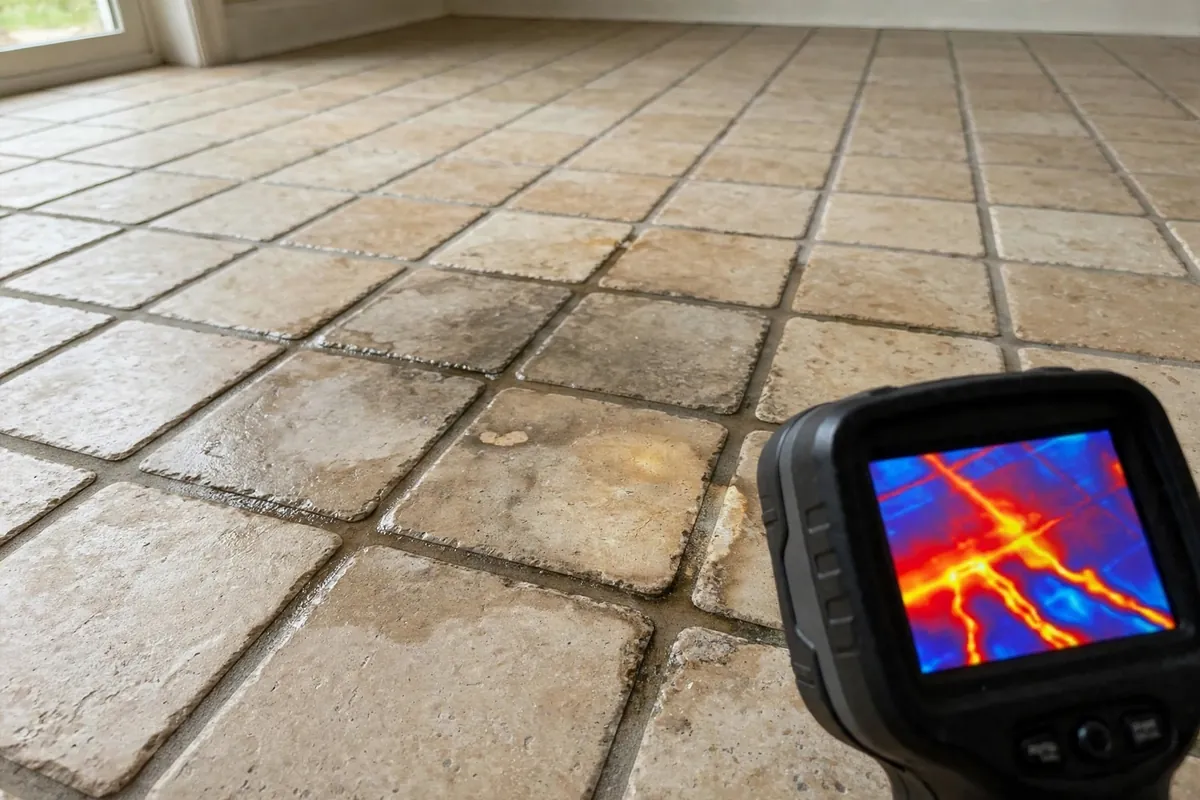
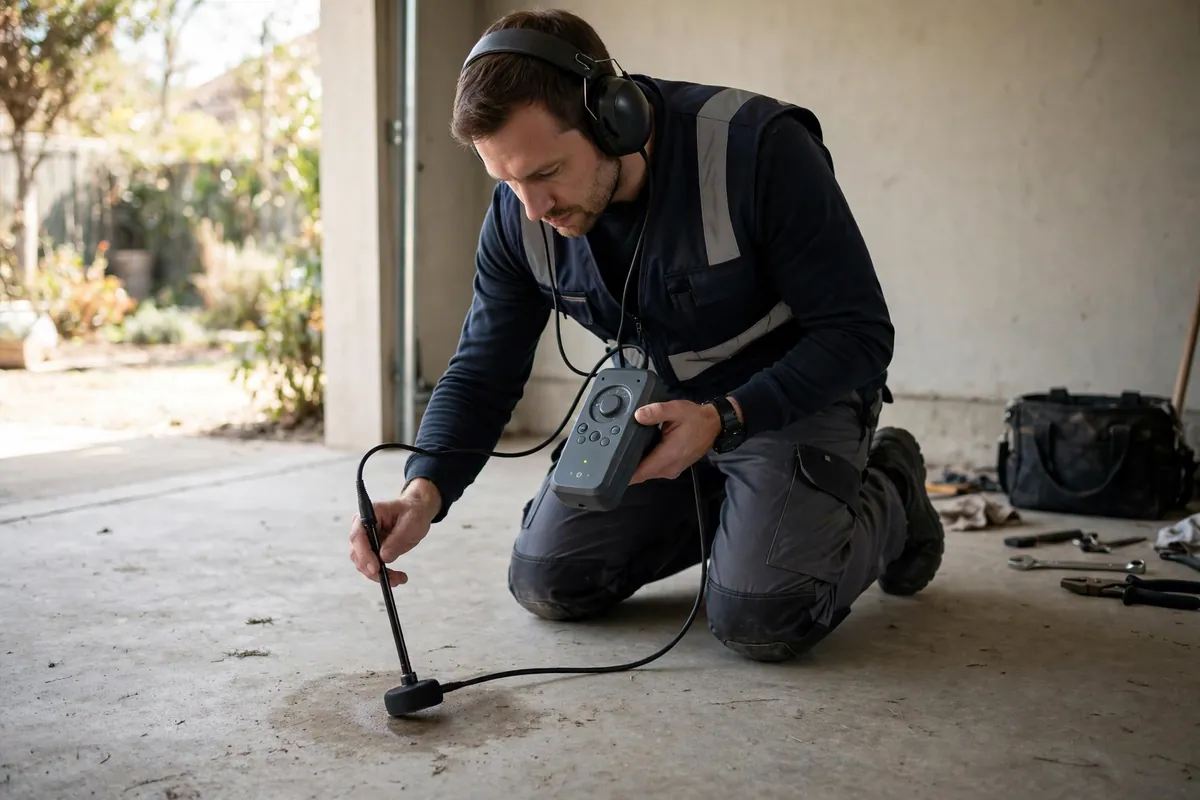
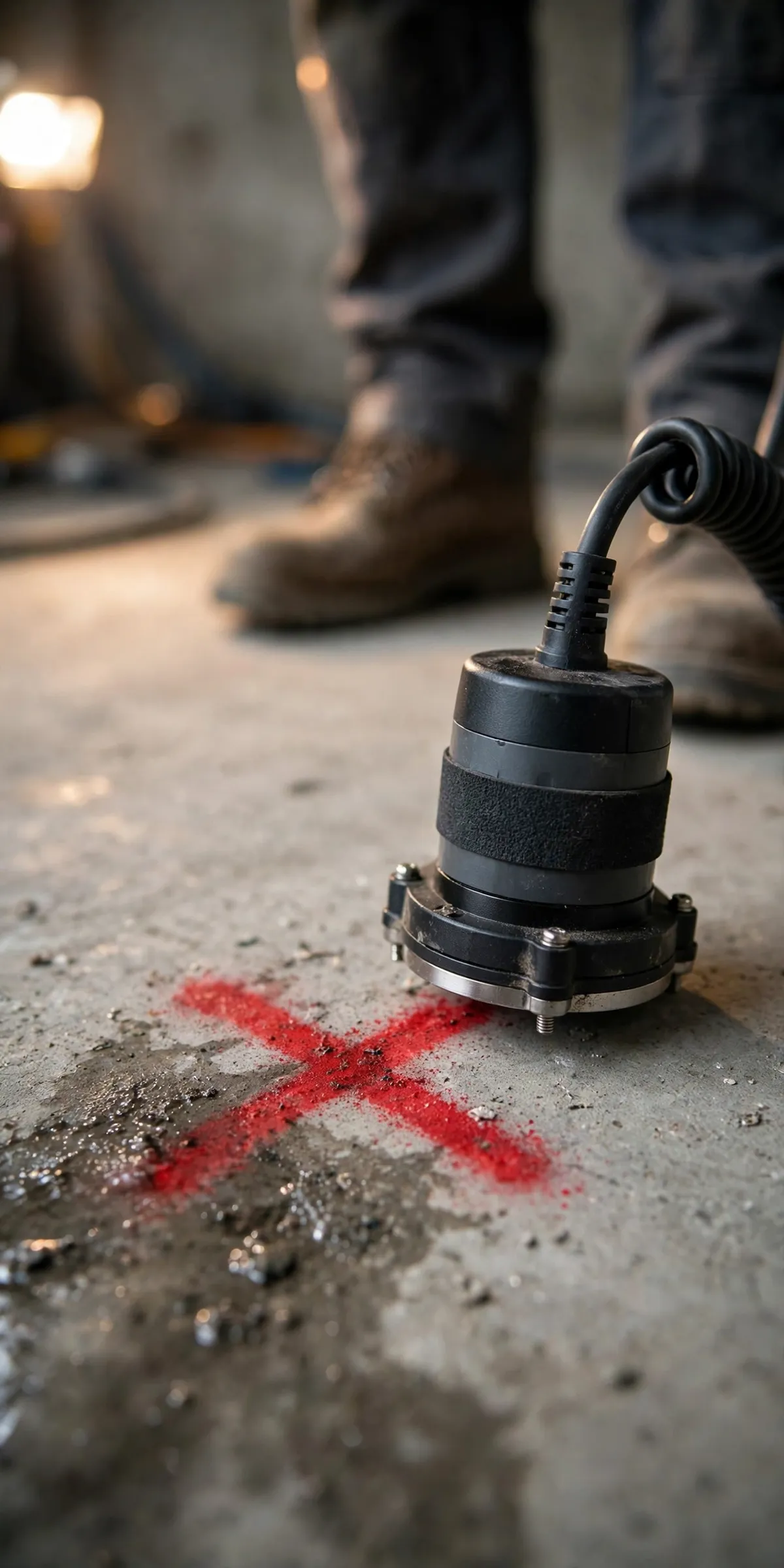
Acoustic leak detection picks up the hiss of water escaping under pressure — leaks sound at roughly 500–1,500 Hz on metal pipe. Thermal leak detection shows the heat bloom where a hot-side leak warms the slab, with surface temperature gradients of just 3–6°F giving away water paths you cannot see. Moisture meters map the dampness spread, and on a stubborn line, tracer gas can sniff out the exact joint or pinhole. Every step is non-invasive — nobody cuts concrete until the spot is marked within inches. That is the whole point of electronic leak detection: pinpoint first, dig second.
The alternative is blind demolition: cutting multiple holes in a slab, patching concrete and flooring, and possibly still missing the break. As one contractor cost site puts it, paying for precise leak detection is usually the cheapest money in the whole project. If the suspect is a supply line under the house, see how our slab leak detection process works; if the line from the meter is losing pressure, our water line leak detection page walks through that one.
What we do
Pinpoint leaks under your concrete slab with acoustic listening and thermal imaging — no jackhammer guesswork, no exploratory holes.
Slab Leak Detection in Whittier, CA →Burst pipe, major leak, water where it should not be — fast response across Whittier, day or night.
Emergency Leak Repair in Whittier, CA →Find leaks in the buried line from your meter to the house — acoustic tracing pinpoints it before anyone digs.
Water Line Leak Detection in Whittier, CA →Losing more water than the Whittier sun explains? Dye testing and pressure checks find pool and spa leaks fast.
Pool & Spa Leak Detection in Whittier, CA →Camera inspection locates breaks, offsets, and root intrusion in your sewer lateral — no guesswork, no trench first.
Sewer Line Leak Detection in Whittier, CA →After-hours service for offices, retail, restaurants, and HOAs — with documentation your insurer accepts.
Commercial Leak Detection in Whittier, CA →Pinpoint lateral lines, valves, and sprinkler head leaks with pressure testing and acoustic location — no digging.
Irrigation Leak Detection in Whittier, CA →Acoustic listening, thermal imaging, tracer gas, and pressure testing find hidden leaks without demolition.
Electronic Leak Detection in Whittier, CA →Combustible gas sniffers, pressure testing, and line tracing pinpoint the leak fast — plus what to do the moment you smell gas.
Gas Leak Detection in Whittier, CA →Signs you need leak detection
Slab-on-grade homes give you no crawlspace and no basement to catch a leak early, so symptoms show up in the living space. A warm spot on the floor where there should not be one. The faint sound of running water with every tap off. A water bill that jumps for no reason — and with California’s tiered water rates, a leak that pushes your usage into a higher tier multiplies the bill beyond just the extra gallons. When you notice any of these, a leak detection visit is the fastest way to know what you are dealing with.
Other tells: cracks in tile or flooring, damp baseboards, a water heater that cycles too often, or a patch of lawn that is suddenly greener than the rest. Outside the house, an irrigation line can leak for months unnoticed — our irrigation leak detection page covers those. In a ranch home, by the time you feel heat through the slab, the leak has been running a while. And if water is actively coming in, our emergency leak repair page explains what counts as an emergency and what to shut off first.
Noticed one of these signs? A same-day leak detection visit settles it.
Leak detection costs, honestly
Nationally, professional leak detection runs $150–$600 depending on the methods needed, averaging $280 (Angi 2026). Compare that to what a leak detection visit saves you from: the average slab leak repair runs about $2,280 (Angi 2026), including detection (typically $630–$4,400) — roughly an eight-to-one ratio for finding it early. And the repair is only part of the story.
The Insurance Information Institute reports that water damage accounts for 22.6% of all homeowners insurance claims, averaging about $15,400 per claim. FEMA puts one inch of standing water at roughly $25,000 in damage. Mold can start on wet surfaces within 24–48 hours (EPA), and a hidden slab leak stays wet around the clock. One homeowner’s account: an $800 fix that became a $22,000 loss after eighteen months of watching a damp patch and waiting — and the gradual-seepage claim was denied.
Those are national figures, not Whittier prices — your actual numbers depend on the job. But the math points one way: a leak detection visit is the cheapest dollar in the whole project. We confirm the detection price up front, so you know what a leak detection visit in South Whittier costs before we touch a tool.
From the blog
Straight answers on costs, warning signs, and finding hidden leaks — from our leak detection Whittier team.
Common questions
Yes — this is the classic Southern California slab-leak housing stock. Most South Whittier tracts were built on slab-on-grade foundations with copper water lines run under the slab, typical for the era. After five decades of service, copper develops pinhole corrosion, and Whittier’s supply runs around 15 grains per gallon — “very hard” water on the Water Quality Association scale — which accelerates scale buildup and wear on lines and connections.
It depends on the street. Orchard Dale Water District — established in 1954 — serves a portion of South Whittier, but Whittier as a whole is served by multiple providers, including the City of Whittier Water Department, Suburban Water Systems, and California Domestic Water Company. Check your water bill to see which one serves your address.
That is the whole point of non-invasive leak detection. Acoustic listening finds the sound of the leak through the slab, thermal imaging shows the heat signature of a hot-side leak, and pressure testing confirms which line is losing water. We mark the spot within inches so any repair opens one small area — not the whole floor.
Nationally, professional leak detection runs $150–$600 depending on the methods needed, averaging around $280 (Angi 2026). A straightforward acoustic and thermal check on one line costs less than a full-house diagnosis with tracer gas. We confirm the price up front before we start.
It can. The October 1, 1987 Whittier Narrows earthquake was magnitude 5.9 with Intensity VIII shaking in Whittier, and water and gas main breaks were documented across town. Any plumbing installed before that date already survived severe shaking — joints and connections from that era are prime candidates for the slow-developing leaks a leak detection visit catches decades later.
A warm spot on the floor, the sound of running water when nothing is on, a water bill that jumps for no reason, cracks in tile or flooring, or damp baseboards. In South Whittier’s slab-on-grade homes there is no crawlspace to hide the symptoms — by the time you feel heat through the floor, the leak has been running a while. Call before it gets worse.
No — South Whittier is an unincorporated census-designated place in southeastern Los Angeles County, just south of the city proper. It sits within the sphere of influence of the City of Whittier, which is why addresses here still say Whittier, CA. We serve South Whittier the same as every other neighborhood: same-day response, non-invasive leak detection, and pricing confirmed up front.
Yes. Beyond South Whittier, we cover Uptown Whittier, East Whittier, Friendly Hills, College Hills, and Murphy Ranch — the whole Whittier area. Housing stock varies by neighborhood, so we tune the leak detection approach to the home, not just the ZIP code.
Non-invasive leak detection for South Whittier’s ranch homes — marked within inches, priced up front. Whittier Leak Detection Pros has served the area since 2014.