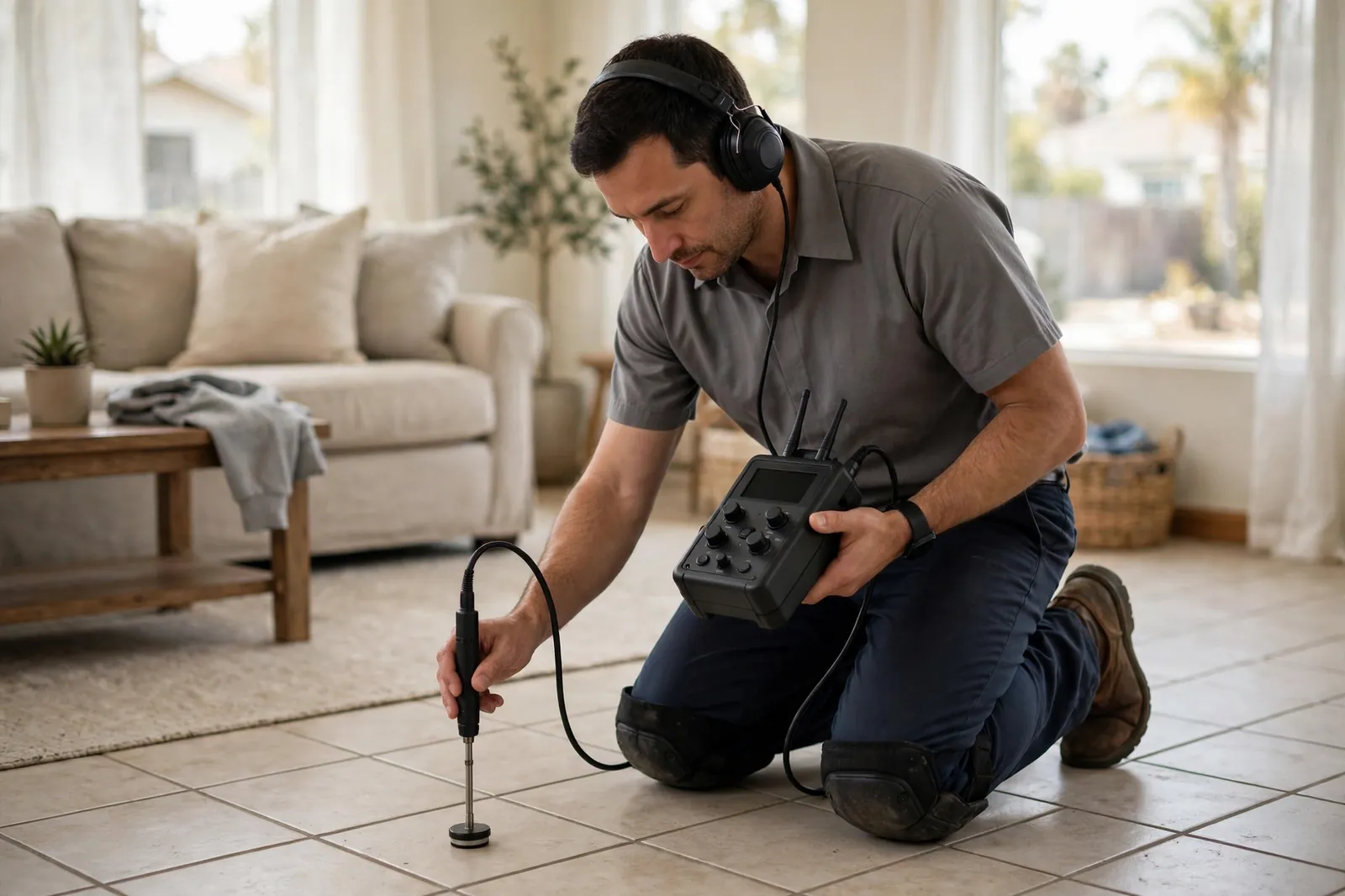
Slab Leaks
Pinpoint leaks under your concrete slab with acoustic listening and thermal imaging — no jackhammer guesswork, no exploratory holes.
Slab Leak Detection in Whittier, CA →Whittier & Southeast LA County Leak Pros
Hidden water leak? We find it without tearing up your home — acoustic listening, thermal imaging, and pressure testing that pinpoints slab leaks and pipe leaks within inches. Serving all 10 Whittier ZIPs, priced up front — every one of our Whittier detection visits works this way. If you found us by searching for leak detection near me in Whittier, you are in the right place: we pinpoint first, and the price is in writing before any work begins.
Content last updated: October 2026
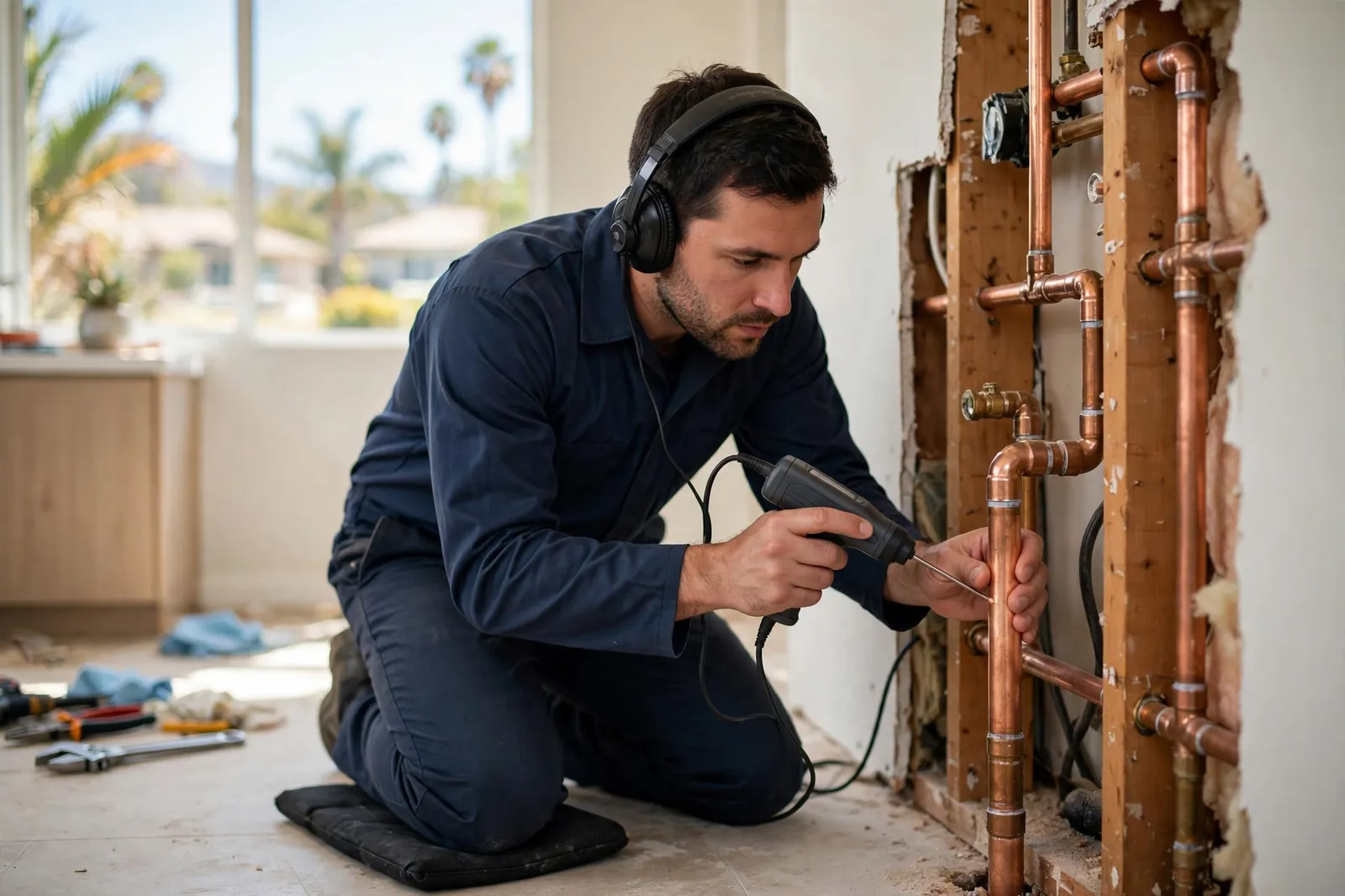
What we do
Pinpoint leaks under your concrete slab with acoustic listening and thermal imaging — no jackhammer guesswork, no exploratory holes.
Slab Leak Detection in Whittier, CA →Burst pipe, major leak, water where it should not be — fast response across Whittier, day or night.
Emergency Leak Repair in Whittier, CA →Find leaks in the buried line from your meter to the house — acoustic tracing pinpoints it before anyone digs.
Water Line Leak Detection in Whittier, CA →Losing more water than the Whittier sun explains? Dye testing and pressure checks find pool and spa leaks fast.
Pool & Spa Leak Detection in Whittier, CA →Camera inspection locates breaks, offsets, and root intrusion in your sewer lateral — no guesswork, no trench first.
Sewer Line Leak Detection in Whittier, CA →After-hours service for offices, retail, restaurants, and HOAs — with documentation your insurer accepts.
Commercial Leak Detection in Whittier, CA →Pinpoint lateral lines, valves, and sprinkler head leaks with pressure testing and acoustic location — no digging.
Irrigation Leak Detection in Whittier, CA →Acoustic listening, thermal imaging, tracer gas, and pressure testing find hidden leaks without demolition.
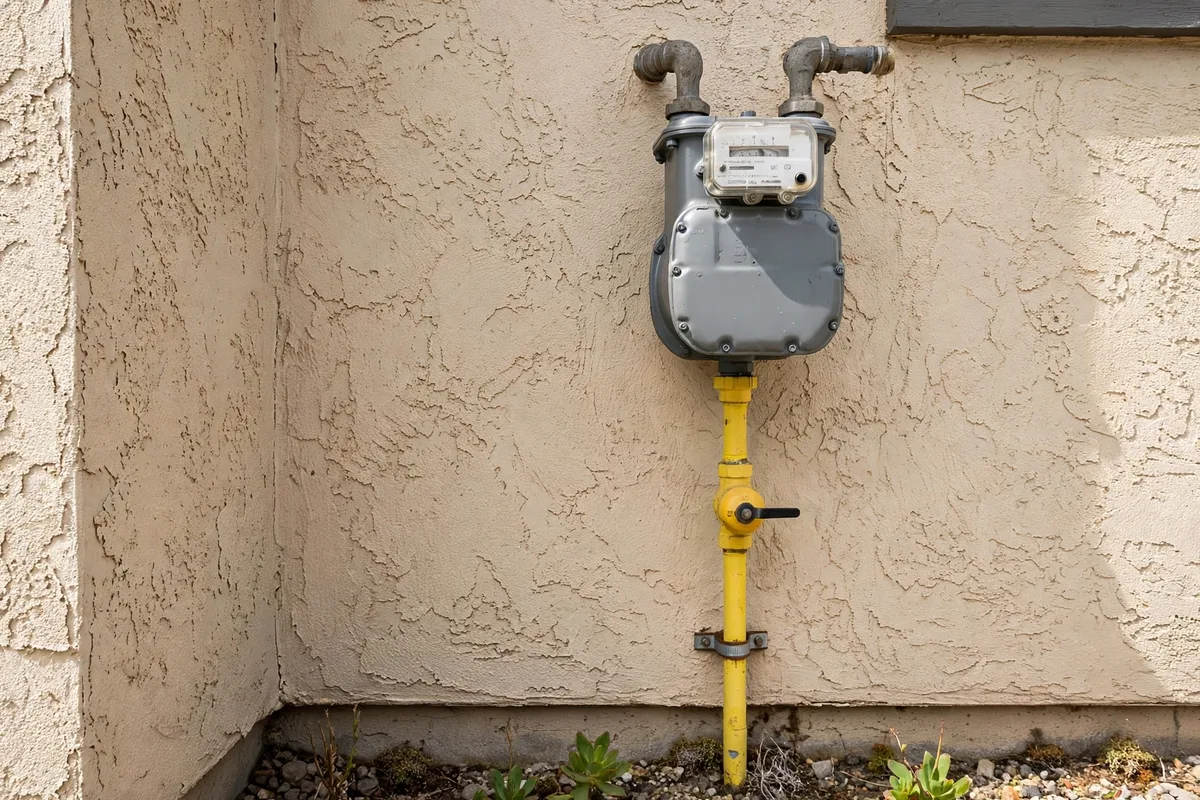
Electronic Leak Detection in Whittier, CA →Combustible gas sniffers, pressure testing, and line tracing pinpoint the leak fast — plus what to do the moment you smell gas.
Gas Leak Detection in Whittier, CA →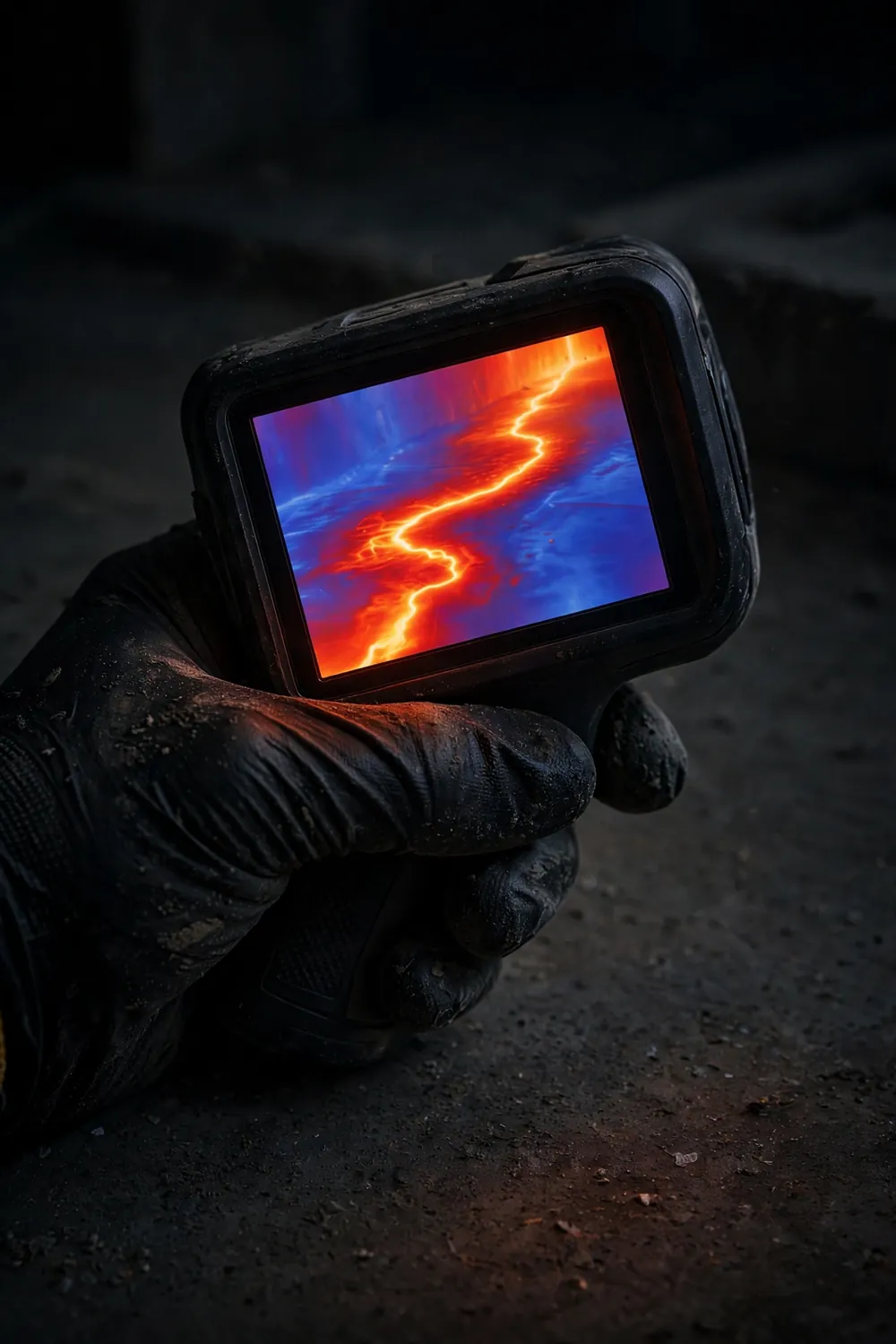
Why it matters
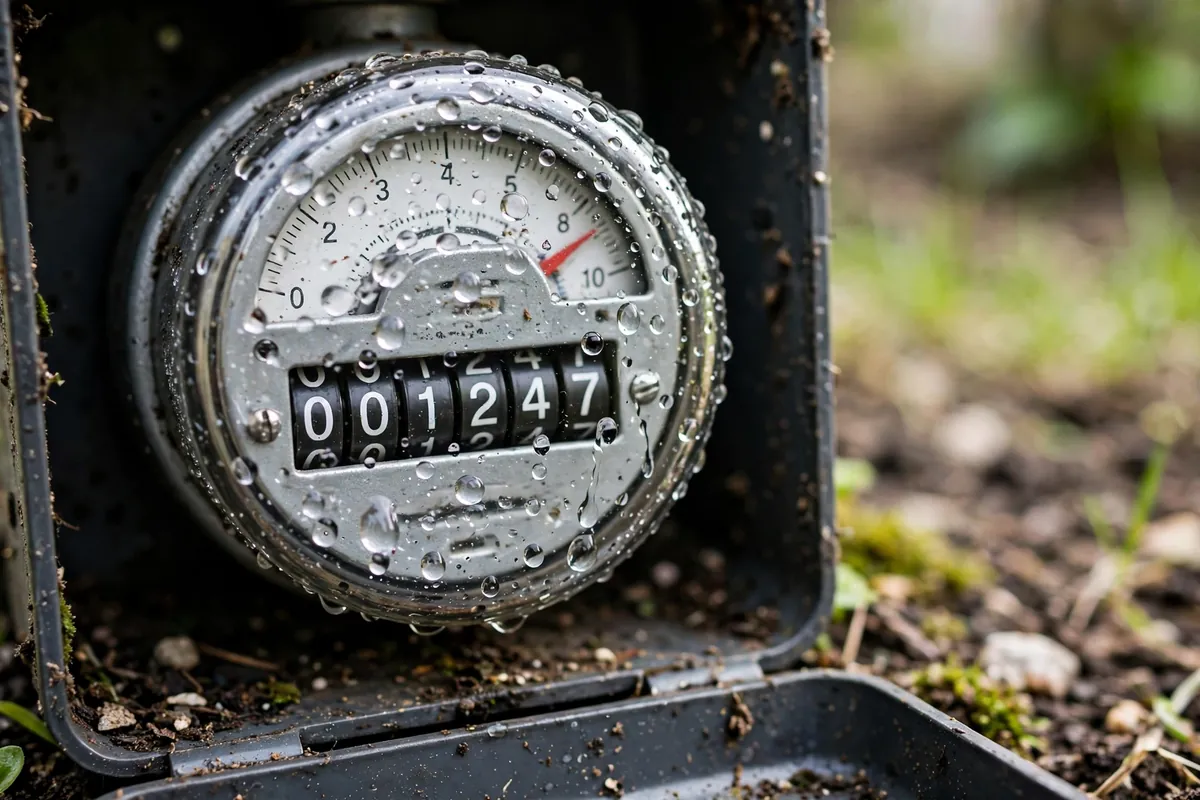
We start at the water meter with everything off — a spinning meter means water is going somewhere it should not. A static pressure test then tells us whether it is the hot side, the cold side, or a drain line losing pressure. No guessing, no assumptions — that is how every one of our Whittier visits begins.
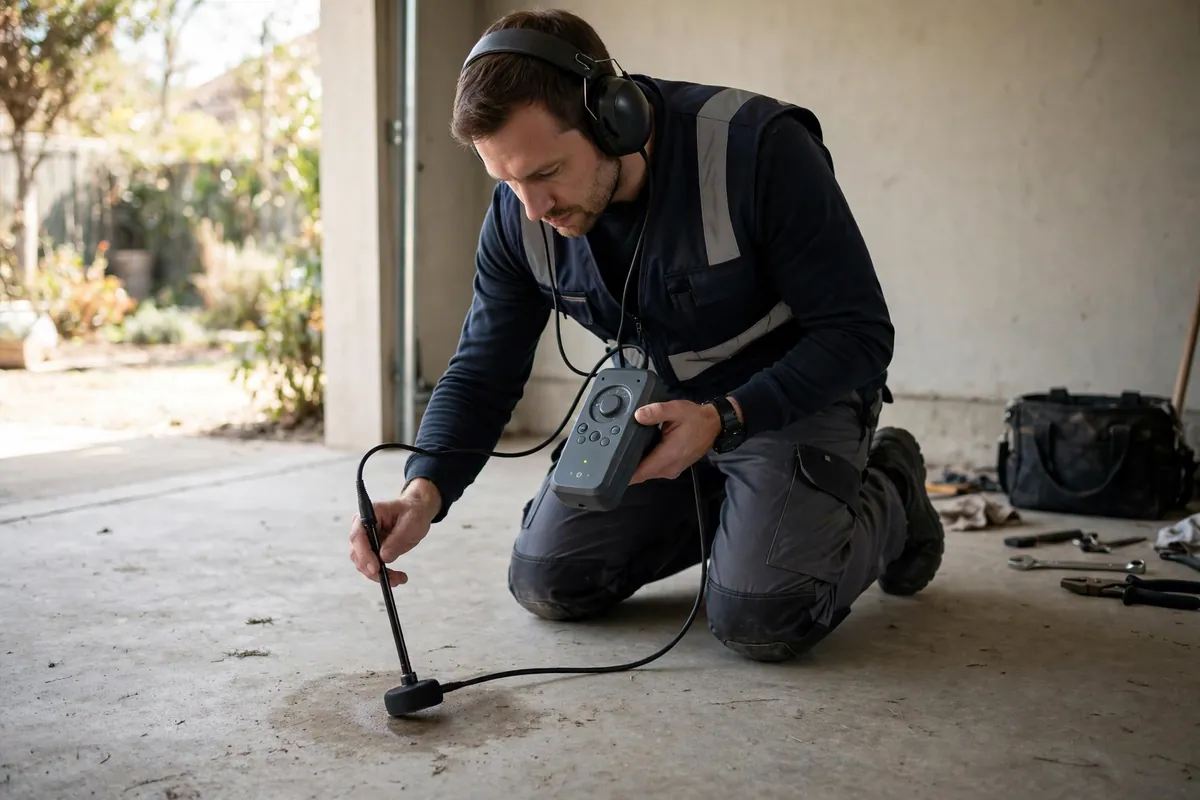
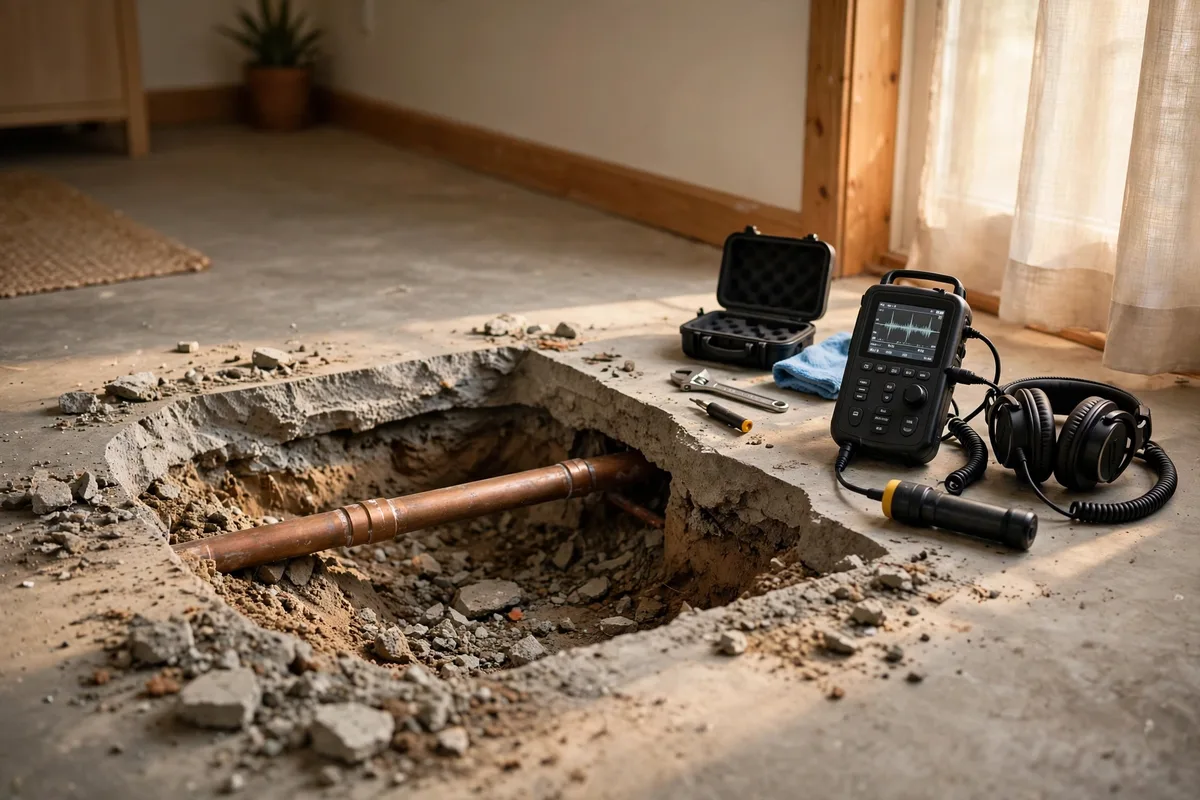
Acoustic ground microphones pick up the exact sound of pressurized water escaping a pipe — on metal lines, leaks ring at roughly 500–1,500 Hz — even through concrete. This is how a slab leak gets located within inches instead of feet — the workhorse of leak detection in Whittier homes.
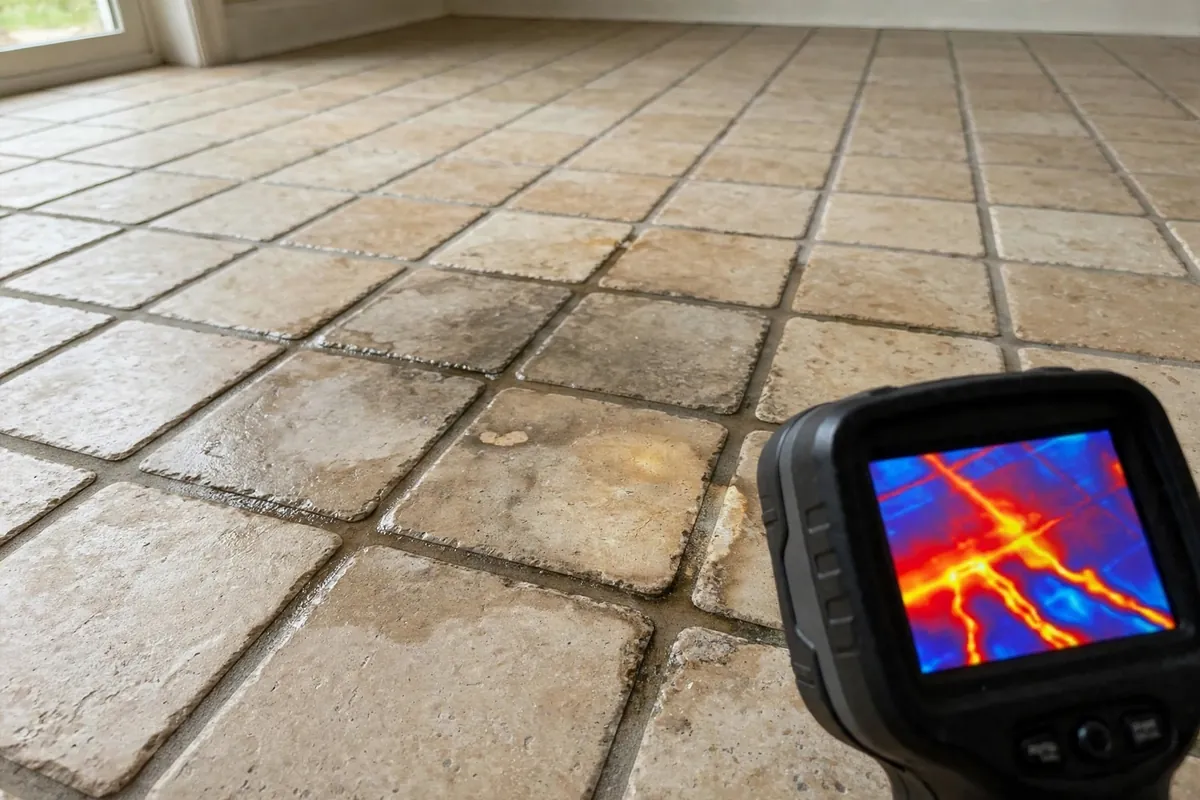
Thermal imaging cameras reveal the warmth of a hot-line leak spreading through a slab or wall — surface temperature gradients of just 3–6°F draw a visual map of where the water is traveling.
For pinhole leaks that barely whisper, tracer gas — a safe hydrogen-nitrogen mix — is pushed into the line and sniffed out at the surface. Accurate where sound alone is not enough.
The leak gets marked on the floor, you get written findings plus a clear repair price — spot repair, reroute, or lining — before any work begins. The report is yours to keep.
How it works
High bill, hot floor spot, sound of running water, damp drywall — whatever tipped you off, we start there.
Pressure tests, acoustic listening, thermal imaging — layered methods until the leak gives up its exact position.
Written findings, marked location, and a clear repair price. The detection report is yours to keep either way.
Emergency service
A pressurized leak can push hundreds of gallons a day into your slab and walls. Shut the main valve if you can, then call: every hour of waiting is more damage and a bigger repair bill.
(562) 450-1003 Call for Emergency ServiceWhy choose us
Locating hidden leaks is our whole trade — here in Whittier, detection is not a sideline between plumbing jobs; it is the job.
Water damage compounds daily. Leaks do not wait — so neither do we.
Acoustic sensors, thermal cameras, pressure rigs, tracer gas — the full layered kit. Trade guidance (Contractor Magazine) is explicit: pinpoint the slab leak before you break the floor.
Quoted before we roll, honored after — you will know your number before we start.
Ranch homes in Murphy Ranch, retail on Greenleaf, HOAs in Friendly Hills — the same equipment and the same written findings.
Based in Whittier since 2014, running routes across all 10 ZIPs — we know which tracts are copper-under-slab and which streets are hardest on pipes.
Pinpoint-first means one surgical opening instead of exploratory demolition — precise detection is usually the cheapest money in the whole project.
Photos, meter readings, and a written report your adjuster can use — documentation that turns a denied “wear and tear” claim into a payable sudden-damage one.
Honest comparison
Plumbers fix leaks well — but finding a hidden one is a different trade. Here is how a dedicated detection visit compares.
| Our Detection Team | General Plumber | DIY | |
|---|---|---|---|
| How the leak is found | Electronic pinpointing — acoustic listening, thermal imaging, tracer gas | Visual inspection, then exploratory openings | Meter test, listening by ear, guesswork |
| Holes in floors & walls | One targeted opening, only where the leak is | Multiple cuts while chasing the leak | Trial and error |
| Pricing | Quoted up front before work starts | Often hourly — total unknown until the job ends | No labor cost, but a wrong guess gets expensive |
| Detection equipment | Acoustic sensors, thermal cameras, pressure rigs | Hand tools, sometimes a camera | Household tools |
| Insurance-ready report | Written report with photos and readings | Varies by plumber | None |
| Knows Whittier’s pipes | Slab tracts, hard water, expansive soil, 1987 quake legacy | General plumbing knowledge | — |
Know the signs
Service area
Searching for leak detection near me in Whittier, CA? Our crews run routes across all 10 Whittier ZIP codes — 90601 through 90610 — from Uptown to East Whittier and every neighborhood in between.
ZIPs we serve: 90601 • 90602 • 90603 • 90604 • 90605 • 90606 • 90607 • 90608 • 90609 • 90610
Primary service zone
Map is stylized — pins show relative areas, not exact locations.
Local knowledge
Most of Whittier was built before its pipes were supposed to retire. The Southern California Association of Governments’ 2019 Whittier profile (Census ACS 2017 data) puts 82.4% of the city’s housing stock before 1970 — homes plumbed with copper and galvanized supply lines run under concrete slabs, exactly where slab leaks start. Fifty-to-eighty-year-old plumbing is at or past its design life; pinhole leaks are not a surprise here, they are a schedule — and the reason our local detection specialists see the same failure patterns tract after tract.
Then there is the water itself. Whittier’s supply is reported at roughly 256.6 parts per million — about 15 grains per gallon (aquatell.com compilation of Whittier Water Quality Reports) — against a “moderately hard” ideal of 3.5–7 grains. The Water Quality Association calls anything over 10.5 grains “very hard.” Hard water plus the chloramine disinfectant in municipal supply is the exact recipe for copper pinhole leaks in the under-slab lines of 1950s–70s tract homes. As one Southern California plumber put it (ClearWater Plumbing OC, via picketfencemedia): “We see new cases every day.”
The ground has its own history. Whittier sits at the foot of the Puente Hills, where city geology references interbedded sand, silt, and clay with “very low to medium” expansion potential — soil that heaves and settles with the wet-dry cycle, stressing buried lines year after year. And if your pipes predate October 1987, they have already lived through the Whittier Narrows earthquake: a magnitude 5.9 on October 1, 1987, with severe (MMI VIII) shaking that broke water and gas mains across town (USGS). Joints that survived that shaking do not always age gracefully — pipes that were “fine” before 1987 have been degrading ever since.
Most of Whittier’s post-war tracts — Friendly Hills, College Hills, Murphy Ranch, East Whittier — are slab-on-grade, so there is no basement to catch a leak. It surfaces as a warm floor spot, damp carpet, or a water bill that doubles. That is why detection-first matters here: pinpointing the leak before anyone cuts concrete means one surgical opening instead of exploratory demolition. Nationally, a detection visit averages around $280 (Angi 2026) against an average slab leak repair near $2,280 including detection (typically $630–$4,400) — finding it first costs roughly an eighth of fixing it late.
And in Southern California, a hidden leak wastes tier-priced water — the leak that pushes you into higher billing tiers multiplies your bill every month until it is found. With Whittier’s median owner-occupied home value at $822,600 (Census QuickFacts 2020–2024), even a “minor” water-damage repair eats real equity fast. A slow under-slab leak never makes a scene — which is exactly why it wins.
Find us
Our office sits on Greenleaf Avenue in Uptown Whittier — right in the middle of the neighborhoods we serve. Here is where to find us:
Whittier Leak Detection Pros
7001 Greenleaf Ave #117, Whittier, CA 90602
(562) 450-1003
From the blog
Straight answers on costs, warning signs, and finding hidden leaks — from our Whittier-based detection team.
 Article
Leak Detection Cost in Whittier: What You'll Actually Pay
Read →
 Article
Slab Leak Symptoms: 7 Warning Signs in Whittier Homes
Read →
 Article
Why Is My Water Bill So High? 7 Hidden Causes in Whittier, CA
Read →
 Article
How to Find a Water Leak in Your House
Read →
 Article
Slab Leak Repair Options in Whittier
Read →
 Article
Gas Leak Safety in Whittier
Read →
Who this helps
The symptom is usually identical — a meter that will not sit still, a bill that jumped, a warm or damp patch with no explanation. What happens next depends on who owns the problem. A homeowner needs the spot marked before anyone opens a floor. A landlord needs proof a tenant’s bill complaint is real before approving a repair. A buyer needs findings in writing before the contingency clock runs out. We run the same layered process for every caller — isolate the line, listen, confirm with a second method — and the written report is yours either way.
Finding it vs. fixing it — the national scale (Angi, 2026)
Common questions
The classic signs: a hot spot on the floor, the sound of running water when every fixture is off, a water bill that jumps for no reason, damp carpet or buckling flooring, and a water meter that moves with all fixtures off. Any one of these deserves a professional visit — slab leaks do not fix themselves. Pros describe them as "the worst kind of leak" to locate (Terry Love Plumbing forum) because water follows the path of least resistance along the slab, so the damage you see is rarely directly above the break. Waiting is never neutral.
With a layered, non-invasive sequence. First, a meter check and static pressure test confirm a leak exists — and which line is losing pressure. Then acoustic ground microphones listen for pressurized water escaping the pipe (on metal lines, leaks ring at roughly 500–1,500 Hz), even through concrete. Thermal imaging maps the 3–6°F surface temperature gradients of a hot-line leak spreading through a slab or wall. For pinhole leaks too quiet to hear, tracer gas — a safe hydrogen-nitrogen mix — is pushed into the line and sniffed out at the surface. Everything happens before any demolition, so any opening is small and surgical.
A typical detection visit in Whittier is priced up front before we roll. Nationally, a professional detection visit runs roughly $150–$600 depending on the method and the site; Angi's 2026 data puts slab leak detection at $150–$400, about $280 on average. The repair is quoted separately once the leak is pinpointed. For context, Angi puts the average slab leak repair around $2,280 including detection (typically $630–$4,400) — so finding it first costs roughly an eighth of fixing it late. Read our full cost breakdown.
Yes — turn off every fixture and water-using appliance, then watch the meter (most have a small leak-indicator dial or triangle). If it moves at all over 15–30 minutes, water is going somewhere it should not. That confirms a leak exists; professional equipment then finds exactly where.
Treat it as urgent. A pressurized supply-line leak under a slab can push hundreds of gallons a day into the soil and foundation — eroding soil, cracking the slab, and feeding mold inside walls. Mold can start within 24–48 hours on wet surfaces (EPA/CDC), and FEMA notes that just one inch of water can cause roughly $25,000 in damage. A drain-line leak is slower but still damages flooring and framing. Either way, every day of waiting raises the repair bill.
It is an age-of-pipe problem, not a homeowner's fault. About 82.4% of Whittier's housing stock was built before 1970 (SCAG, 2019 local profile) — much of it plumbed with copper and galvanized lines run under concrete slabs. Decades of very hard water (reported around 15 grains per gallon in Whittier Water Quality Reports), soil movement under the Puente Hills, and — for the oldest pipes — the 1987 Whittier Narrows earthquake wear those lines thin. Pinhole leaks and slab failures are the predictable result at this age.
Often, sudden and accidental water damage is covered — but every policy differs, and gradual leaks are typically excluded under "wear and tear" provisions. Most policies cover the resulting damage and sometimes the access cost, but not always the pipe repair itself or long-term seepage. One homeowner's story: an $800 fix became $22,000 after eighteen months of watching a damp patch on the wall — and the gradual-seepage claim was denied: "I received nothing" (first-person account, vocal.media). We document everything with photos and readings — a detection report is what turns "you should have known" into a payable sudden-damage claim.
Both — but the diagnosis comes first. Once we pinpoint the leak, you get a clear written price for the repair: a spot repair, a reroute overhead, or epoxy lining depending on the pipe's condition. Often the smartest fix is to abandon the failed under-slab section and reroute overhead — "less expensive, messy, and disruptive" than chasing it through concrete (Leak Detection Pro, via inspectionnews). You approve the fix before any work starts, and the detection findings are yours to keep either way.
Yes — we are based right here in Whittier at 7001 Greenleaf Ave #117, and we serve all 10 city ZIP codes, 90601 through 90610. Call (562) 450-1003: we pinpoint the leak with acoustic listening and thermal imaging, price the visit up front, and put the findings in writing.
Every visit ends the same way: the leak marked on your floor, written findings in your hand, and a clear repair price before any work begins — documented for your insurer — the standard for leak detection for Whittier homes.