Slab Leaks
Pinpoint leaks under your concrete slab with acoustic listening and thermal imaging — no jackhammer guesswork, no exploratory holes.
Slab Leak Detection in Whittier, CA →College Hills — Whittier, CA
We provide leak detection College Hills Whittier homeowners trust for older homes — pinpointing slab leaks and hidden pipe leaks non-invasively, protecting original plaster and tile while locating the break within inches.
Local focus
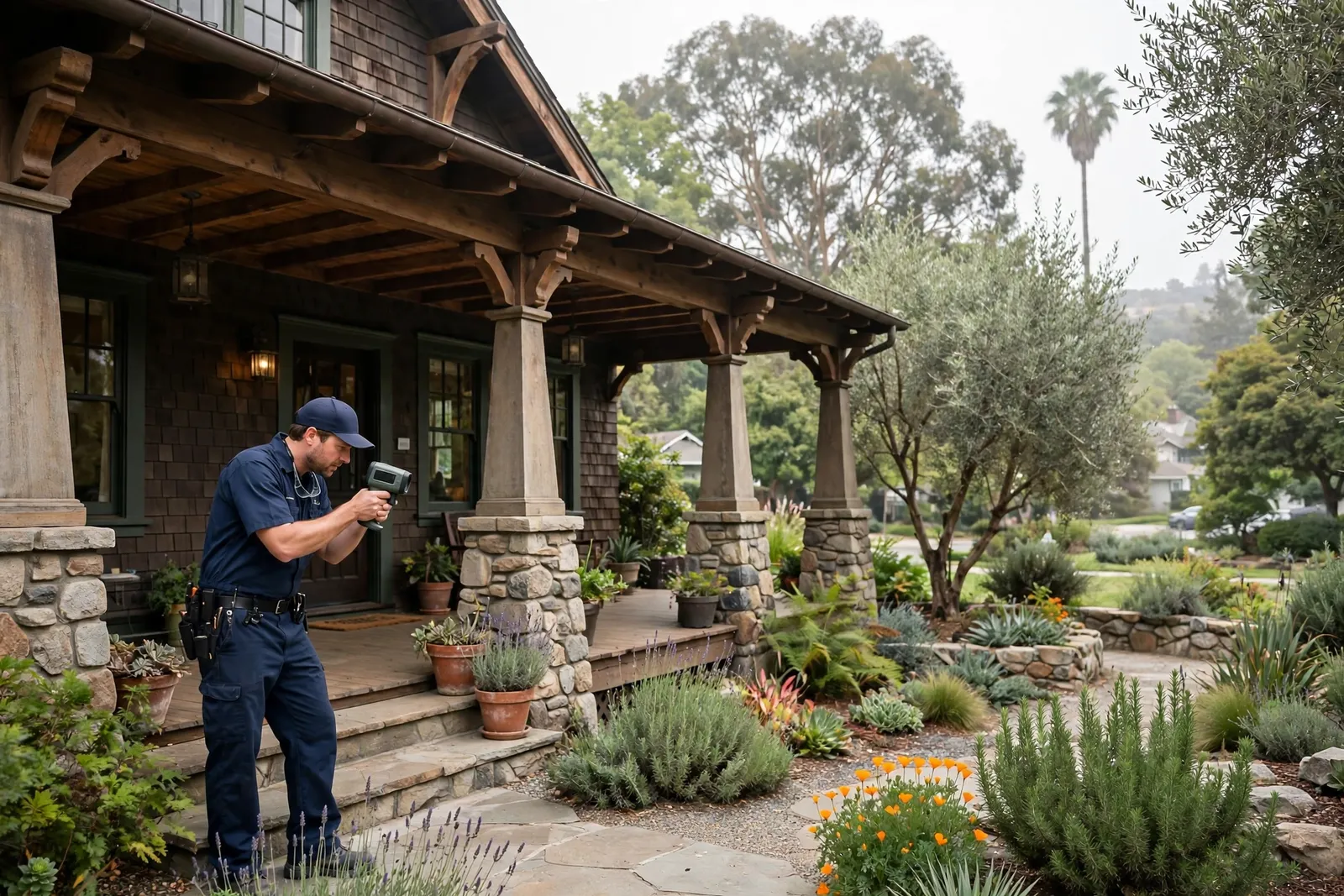
College Hills is the neighborhood around Whittier College — a City-designated historic district where the architecture runs from the 1920s through the postwar years. Walk Worsham Drive, Hillside Lane, or Earlham Drive and you'll pass Spanish Colonial Revival stucco with clay tile roofs, Craftsman bungalows, and Tudor Revival homes — many still carrying the same supply lines they were plumbed with.
We work in College Hills a lot, and the pattern is consistent: these are some of the oldest pipes in Whittier. The Earlham Historic District covers Whittier College faculty housing built from 1903 to 1940, and the district's galvanized supply lines from the 1920s through the 1950s are decades past their 40-to-50-year design life. Galvanized steel corrodes from the inside out — pinholes open where you can't see them, and more are usually forming.
Original plaster walls, vintage tile, and hardwood floors can't be put back once they're cut open, so opening walls on a guess is the wrong move. The reason leak detection College Hills Whittier homeowners rely on starts right there: non-invasive leak detection finds the break before anyone opens anything. Acoustic listening and thermal imaging work straight through plaster and tile without touching them.
Then there's the water itself: Whittier's supply runs hard — reported around 15 grains per gallon, well into the "very hard" range — and hard water plus chloramine disinfectant eats pinholes through copper — the classic leak detection case. Add the October 1987 Whittier Narrows earthquake, which broke mains all over town and left stressed joints weeping slowly for decades, plus Puente Hills clay soils that shrink in dry summers and swell with winter rain — and buried lines here get worked loose year after year.
That combination is why most College Hills calls end up as slab leak detection in Whittier, CA, water line leak detection in Whittier, CA, or electronic leak detection — same-day leak detection across the neighborhood.
Why leaks happen here
In College Hills, the pattern behind most leak detection calls: old pipe meeting hard water on moving ground:
Galvanized supply lines past their lifespan. City-wide, 82.4% of Whittier's housing stock was built before 1970 (SCAG, via U.S. Census data) — and College Hills runs older than the city average. Galvanized steel supply lines from the 1920s–50s last roughly 40 to 50 years; corrosion narrows them until pinholes open behind walls and under floors — exactly what professional leak detection finds.
Cast iron drains corroding from the inside. Drain and sewer lines in homes of this age are typically cast iron, which fails the same way — from the inside out, behind many slab-adjacent leaks where later additions tie into the original foundation. Our sewer line leak detection locates these without exploratory digging.
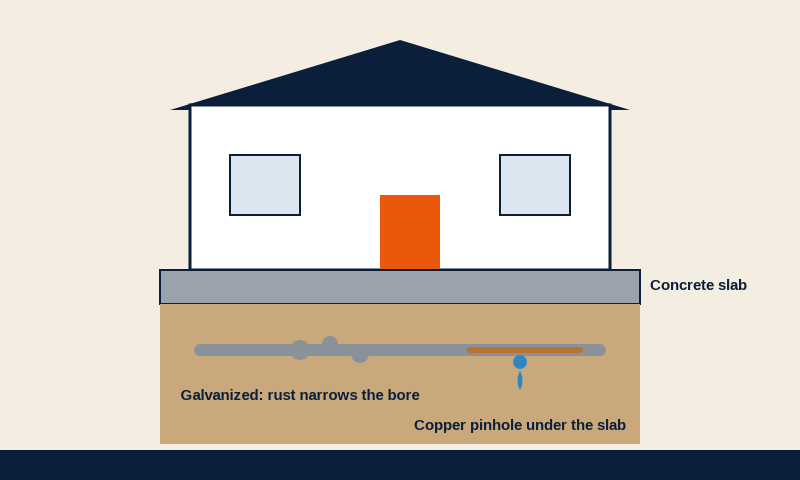
Very hard water. Whittier's reported 15 grains per gallon is roughly double the "moderately hard" range, and hard water accelerates pinhole failures in copper. Most of College Hills sits slab-on-grade, so a copper pinhole under the concrete shows up as a warm floor spot or a bill spike — not water pooling in a basement.
The 1987 quake's long tail. The Whittier Narrows earthquake shifted buried copper joints across town. Nearly four decades later, those stressed joints are failing now — and leak detection finds them before the damage compounds.
Clay soil that moves. Puente Hills clay has low-to-medium expansion potential — enough seasonal heave and settlement to deflect buried pipelines every year, starting with drain and sewer laterals.
When neighbors in Uptown Whittier or East Whittier describe the same symptoms — the mysterious bill, the warm tile, the musty closet — it is usually the same story — found the same way through leak detection. We serve those neighborhoods too, along with Friendly Hills, Murphy Ranch, and South Whittier; see the full list of service areas.
How it works
We confirm the leak exists before we hunt for it. Every College Hills leak detection visit follows the same non-invasive sequence:
1. History and meter check. We start with what you have noticed, then run the definitive test: everything in the house off, then watch the water meter. If it is still moving, water is going somewhere it should not.
2. Pressure isolation. A static pressure test on each line tells us whether you are losing water — and whether it is the hot side, cold side, or a drain line. In older College Hills homes with several generations of pipe, this keeps us from chasing the wrong system.
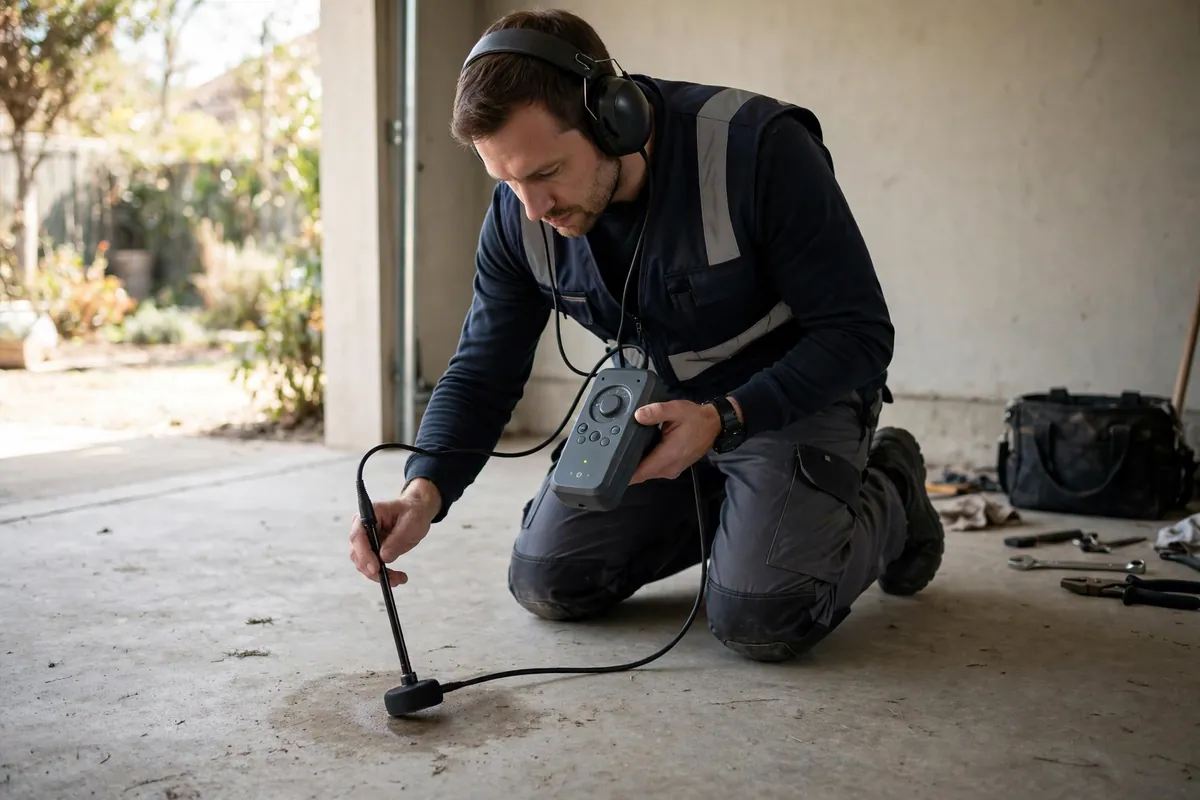
3. Acoustic leak detection. Sensitive ground microphones trace the hiss of pressurized water escaping along the suspected run, narrowing the search to a small area — through floors and walls, without opening them.
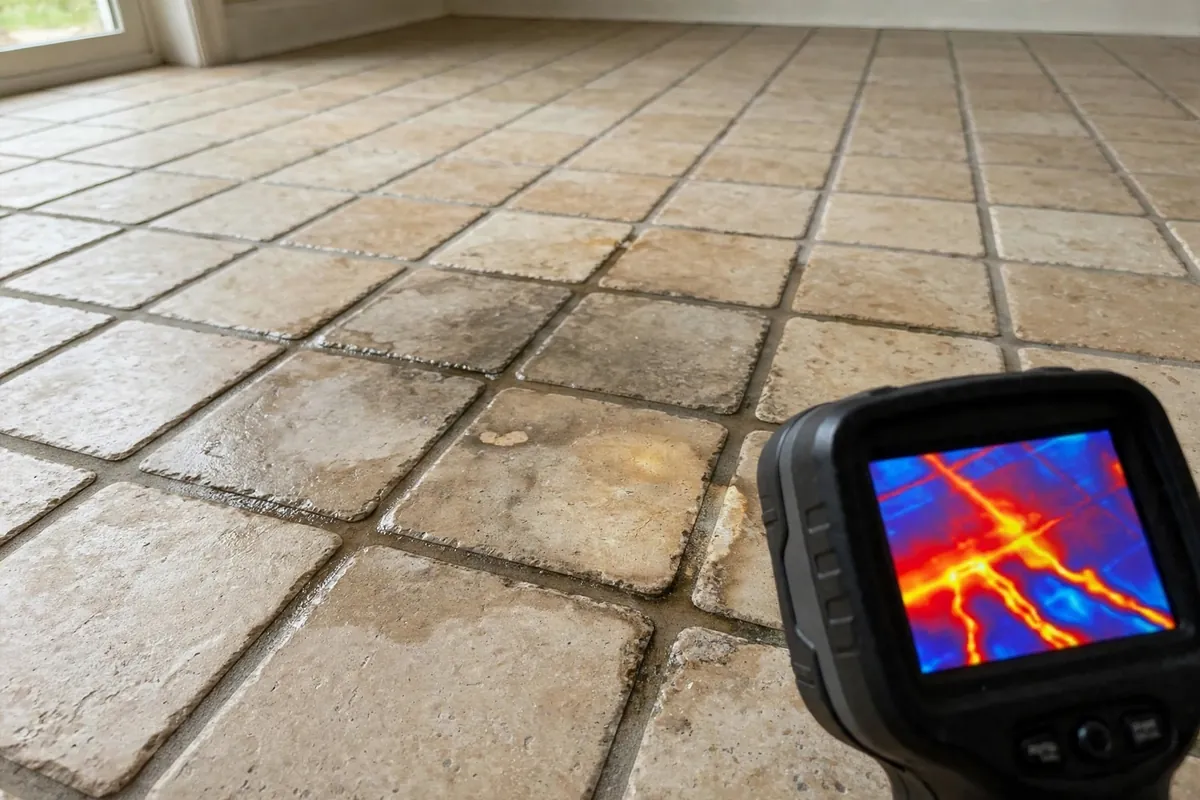
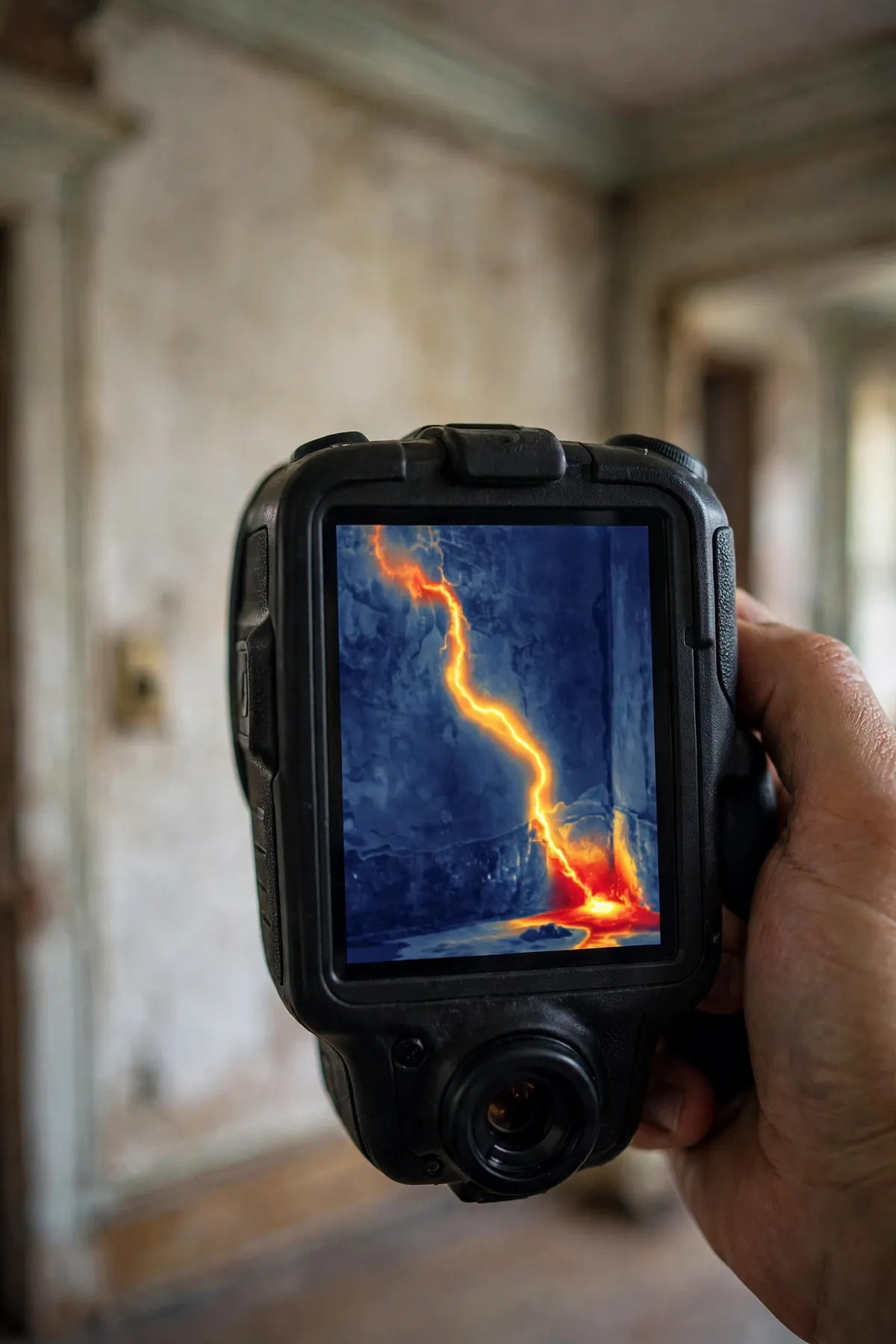
4. Thermal leak detection. For hot-side leaks, an infrared scan shows the heat signature spreading through slab or wall — visible proof of the leak's path before anything is opened.
5. Mark and document. The leak location gets marked within inches, and you get written findings your plumber or insurer can work from.
Common College Hills leak detection calls: pinhole leaks in aging copper behind bathroom walls, slab-adjacent leaks where additions meet the original foundation, failing fixture shutoffs untouched for thirty years, and unexplained bill jumps. If water is surfacing fast or flooding, skip the detective work and head straight to emergency leak repair in Whittier, CA. For gas odor or suspected gas line issues, see our gas leak detection page.
What we do
Pinpoint leaks under your concrete slab with acoustic listening and thermal imaging — no jackhammer guesswork, no exploratory holes.
Slab Leak Detection in Whittier, CA →Burst pipe, major leak, water where it should not be — fast response across Whittier, day or night.
Emergency Leak Repair in Whittier, CA →Find leaks in the buried line from your meter to the house — acoustic tracing pinpoints it before anyone digs.
Water Line Leak Detection in Whittier, CA →Losing more water than the Whittier sun explains? Dye testing and pressure checks find pool and spa leaks fast.
Pool & Spa Leak Detection in Whittier, CA →Camera inspection locates breaks, offsets, and root intrusion in your sewer lateral — no guesswork, no trench first.
Sewer Line Leak Detection in Whittier, CA →After-hours service for offices, retail, restaurants, and HOAs — with documentation your insurer accepts.
Commercial Leak Detection in Whittier, CA →Pinpoint lateral lines, valves, and sprinkler head leaks with pressure testing and acoustic location — no digging.
Irrigation Leak Detection in Whittier, CA →Acoustic listening, thermal imaging, tracer gas, and pressure testing find hidden leaks without demolition.
Electronic Leak Detection in Whittier, CA →Combustible gas sniffers, pressure testing, and line tracing pinpoint the leak fast — plus what to do the moment you smell gas.
Gas Leak Detection in Whittier, CA →Warning signs
In College Hills, leaks rarely announce themselves with a puddle. Here is what they look like instead — the signs that send homeowners to leak detection:
A water meter that won't sit still. Turn off every fixture, then watch the meter. Still moving? Water is going somewhere it shouldn't — the classic sign of a hidden supply leak — and the first check in any leak detection visit.
A bill that jumps for no reason. Southern California water is tier-priced, so a hidden leak doesn't just add gallons — it pushes you into higher tiers and multiplies the bill.
Warm spots on the floor. Most College Hills homes are slab-on-grade, so a hot-water pinhole under the concrete announces itself as a warm patch of tile or laminate.
Running water sounds with everything off. A faint hiss or rush inside a wall when no fixture is running is pressurized water escaping — exactly what acoustic leak detection equipment is built to trace.
Musty plaster or a damp closet smell. Mold can start on wet surfaces within 24 to 48 hours, and a slow leak inside plaster feeds it around the clock. A musty smell in an old home is never "just the age of the house."
One suspiciously green patch of lawn. Irrigation lines break quietly too — our irrigation leak detection sorts a broken lateral from a watering schedule, and pool leak detection separates real losses from evaporation.
Spot two or more of these and get the meter test done — catching it at the "signs" stage is the difference between a leak detection visit and a restoration project.
Costs
Nationally, professional slab leak detection runs about $150 to $400, averaging around $280 (Angi 2026 data) — and overall leak detection typically runs $150 to $600 depending on the methods and the site. We confirm your price up front before we start.
The comparison that matters: a slab leak repair averages roughly $2,280 nationally (Angi 2026), including detection (typically $630–$4,400) — about eight times the cost of detection. Precise leak detection narrows the dig to one spot instead of several, which is what keeps a $280 visit from becoming a $2,280 repair.
The industry numbers back early leak detection. Water damage accounts for about 22.6% of all homeowners insurance claims, averaging around $15,400 per claim (Insurance Information Institute) — and FEMA notes that a single inch of water can cause roughly $25,000 in damage.
One honest note on insurance: sudden, accidental failures are often covered, but gradual leaks are typically excluded as wear and tear. A written leak detection report documenting what failed — and where — turns "you should have known" into a payable claim, so finding and documenting the leak quickly protects you twice.
From the blog
Straight answers on costs, warning signs, and finding hidden leaks — from our leak detection Whittier team.
Common questions
They get more pipe failures — and more leak detection calls — generally. College Hills is one of Whittier's designated historic districts, so its housing stock runs older than most of the city. Galvanized-era pipe typical of pre-1940s homes is well past its comfortable lifespan now, which means more pinhole leaks, more failing shutoffs, and more slab-adjacent leaks where additions meet the original foundation.
That is exactly what non-invasive leak detection is for. Acoustic listening and thermal imaging work through floors and walls without opening anything. In College Hills homes with original plaster, vintage tile, or hardwood worth preserving, pinpoint accuracy matters even more — and that is what the equipment delivers.
Typically $200-$600 depending on the methods needed. Older homes sometimes need an extra step — like tracing which of several generations of pipe is actually leaking — but the detection price is confirmed up front before we start.
The meter test our leak detection techs use is the definitive check: turn off everything in the house, then watch the water meter. If it is still moving, water is going somewhere it should not. Other signs: an unexplained jump in your water bill, warm floor spots, a musty smell in plaster walls, or faint running water with nothing on.
Yes. Our leak detection crews serve all of College Hills — including the historic cluster along Earlham Drive and the streets around Whittier College — with same-day response across the area.
Yes — that is the standard College Hills setup. Most of the neighborhood's homes are slab-on-grade with copper supply lines running under the concrete, so pinhole leaks surface as warm floor spots or unexplained bill spikes rather than visible water. Acoustic and thermal leak detection were built for exactly this: pinpointing a leak under a slab within inches, with no demolition until the location is confirmed.
A hidden supply leak — especially a hot-side slab leak — runs 24 hours a day, and Southern California's tier-priced water multiplies the damage: the leak pushes you into higher tiers, so the bill can double or triple before anything looks wet. Start with the meter test — everything off, then watch for movement. If the meter won't sit still, a leak detection visit will find where the water is going.
Usually detection itself is not covered, but the damage from a sudden, accidental failure often is. The catch: gradual leaks are typically excluded as wear and tear, which is why a written leak detection report matters — it documents what failed and where, turning "you should have known" into a payable sudden-damage claim. Get the leak found and documented quickly, then check your policy.
Non-invasive leak detection for College Hills' historic homes — pinpointed within inches, priced up front.