Whittier Water Line Specialists
Water Line Leak Detection Whittier, CA
Your water bill jumped, one strip of the yard stays soggy, and everything inside the house checks out — that points to the buried line. Our water line leak detection Whittier service starts at the meter: isolate, pressure-test, trace the pipe's path acoustically, and mark the break before a single shovel hits dirt. Every step is handled by our Whittier team, from the meter test to the marked spot.
- Meter-to-house testing — we prove it is your line before anyone digs
- Break located within inches along the line's path
- One marked spot opened — not a trench across the whole yard
The basics
What Is the Main Water Line?
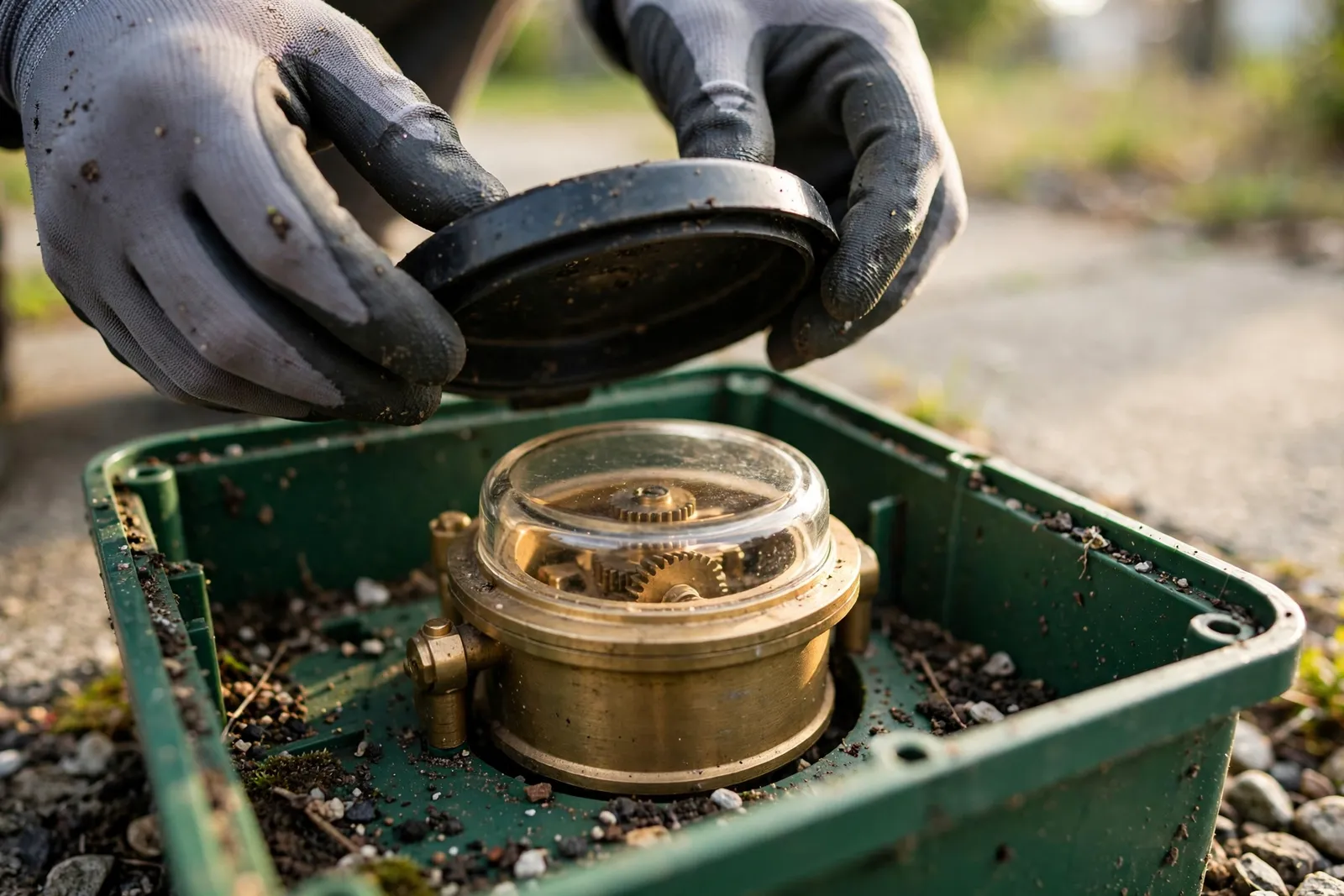
Your main water line is the pipe from the city's meter — usually at the street curb or sidewalk — to your home, and every drop your household uses travels through it. The meter measures water before it enters that line, so a leak between the meter and the house means you are paying for water that never reaches a tap — it just soaks into the yard instead.
In Whittier, that buried run is very often the original pipe from when the house was built — galvanized steel or copper laid in the 1950s through the 1970s. That puts many service lines here at 50–70 years old: galvanized steel typically lasts 20–50 years and rots from the inside out, while copper runs about 50 years before pinhole leaks show up.
One SoCal wrinkle: much of the region's water is disinfected with chloramines, which the California Professional Association of Specialty Contractors warns are corrosive to copper — one trade report calls the damage "devastating pin-hole leaking." Hard local water scales copper from the inside too. Still, an inspector on the InspectionNews forums offers the honest counterweight: 70-year-old galvanized in excellent condition, 10-year-old copper riddled with pinholes at the joints — chemistry and installation matter as much as the year it was buried. Only a locate and a pressure test tell you what your line is.
How it works
How a Buried Water Line Leak Gets Found Without Digging Up the Yard
Your service line is the buried pipe from the meter to your house — under soil or concrete. A leak on it is a different animal from a leak inside the house: the reliable way to find a break is to test and listen, never to dig and hope.
Start at the meter. Start at the meter: turn off every fixture and water-using appliance, check the meter, and wait at least 30 minutes — if it moves with nothing running, water is escaping on your side. We then isolate the house side and pressure-test it; a steady drop confirms the loss is on the service line, not a running toilet or a dripping hose bib.
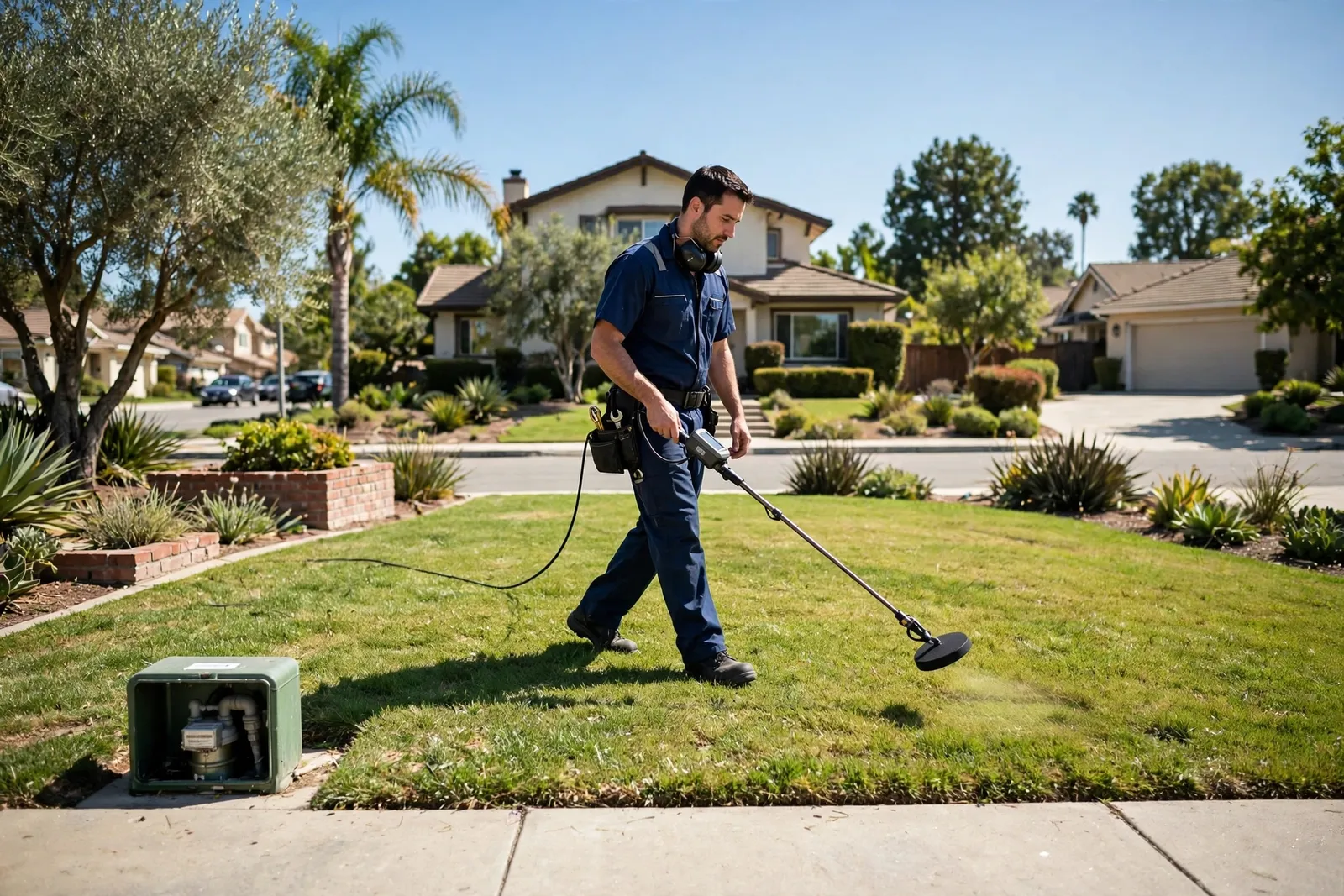
Then trace the line with sound. From the meter, we walk the pipe's route with an acoustic ground microphone that amplifies the hiss of escaping water — it peaks right over the break, and a seasoned tech can put the mark within inches. Terry, a plumber on the Terry Love forums, says it plainly: "it's a good idea to look at hiring a leak detection company. They often can spot it within inches or feet using sound."
Two more tools for tricky runs: the leak noise correlator — two sensors on the pipe compare the leak noise and compute the position from the delay — and tracer gas, a 5% hydrogen / 95% nitrogen mix that rises through the isolated line and surfaces right over the break, where acoustic gear struggles on plastic pipe or low pressure.
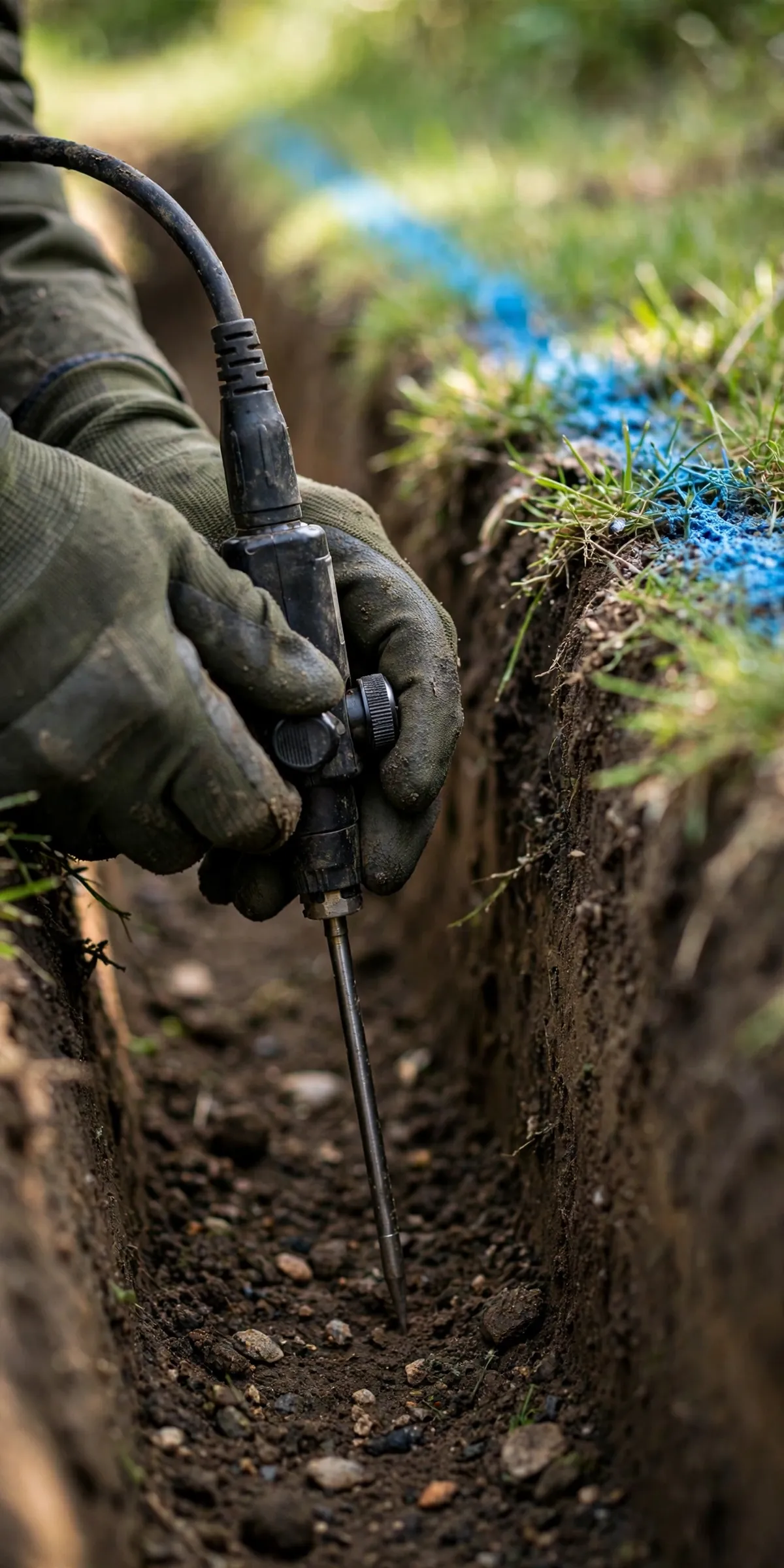
When nobody knows where the pipe runs — common on older Whittier lots — we locate it first. One forum case: a homeowner dug test holes on a 250-foot run and found nothing, until a pro shoved metal fish tape into the line and traced the route with a locator. Then we walk the path and listen. And one pro rule: hire "a professional leak detector company, NOT a plumber who advertises 'leak detection,'" as a master plumber on the Terry Love forums puts it.
Why Whittier service lines fail the way they do: many original lines here are 50–70 years old, laid through expansive Puente Hills clay — a City of Whittier document warns such soils "can heave foundations, slabs, and adversely deflect pipelines" — swelling with winter rain and shrinking in the dry months, working buried joints loose. Any line installed before October 1987 also rode out the Whittier Narrows quake, which broke water mains across the area; a line stressed at its joints then can become the leak of years later.
If the failure turns out to be under the slab rather than out in the yard, that is a different specialty — see our slab leak detection page.
Warning signs
Signs Your Main Water Line Is Leaking
The meter test is the definitive check — but most homeowners notice the symptoms first, in the yard, the water pressure, or on the bill.
Outside the house
- One strip of lawn grows faster and greener than the rest
- Soggy or sunken spots in the yard that never dry out
- Water surfacing near the sidewalk, driveway, or meter box
- Cracks or damp patches in concrete along the line's path
- Thirsty roots chasing the line — roots wrap buried pipe and squeeze it "like a boa constrictor" until it leaks
Inside the house and on the bill
- Water bill jumps with no change in usage
- Noticeable drop in water pressure at fixtures
- Water meter moves with everything in the house off
- Rusty or discolored water after the line sits overnight — a classic sign of corroding galvanized pipe
One caution: a high bill alone does not prove a service line leak — a running toilet or a stuck irrigation valve can do the same, which is why we always start with the meter test. Water coming up fast or flooding the yard is past detective work — head straight to emergency leak repair in Whittier, CA.
Repair options
Repair the Section or Replace the Whole Line?
Here is how the two paths compare, with national cost ranges from Angi's 2026 data.
Spot repair — when it fits
- Single clean break, rest of the line pressure-tests sound
- One accessible dig at the marked spot, section replaced
- Usually completed in a single day
- About $2,000 national average per Angi 2026 ($50–$250 per linear foot)
Full replacement — when it is time
- Galvanized line already corroded or narrowed throughout
- Repeat leaks on the same run — the next break is already forming
- About $1,703 national average per Angi 2026 ($50–$150 per linear foot)
- New line sized right for the house, often with trenchless options
If you are replacing, how the new line goes in matters too. Trenched: $50–$250 per foot nationally (Angi 2026). Trenchless: pipe lining $75–$150, pipe bursting $50–$200 per foot — sparing the driveway and landscaping. A new shut-off valve is typically $400–$800, permits and inspections $150–$500 — national ranges. One Bogleheads homeowner put it bluntly: replacement "can cost up to $5K - no joke."
A word on insurance: A word on insurance: standard policies usually exclude this — they cover sudden damage, not wear and tear, and gradual deterioration, rust, root intrusion, and soil movement are all excluded. The fix is a service-line endorsement: a $20–$50-per-year rider (some carriers $30–$100) covering underground water and sewer lines for $10,000–$25,000 per incident, often with a separate ~$500 deductible. One Bogleheads homeowner did the math: "$50 vs. $5000.00, I'd have to be paying it out for a very long time for me to lose."
Honest guidance: copper or plastic in good shape with one failure point? Repair it — that is smart money. A pre-1960s galvanized line already narrowed inside, the kind we pull out of Uptown yards? We will show you the math on replacement, because the second leak is usually already forming. We run main-line calls across every Whittier neighborhood, and we price both options either way.
How we find it
Water Line Detection Methods Compared
A buried line needs a different approach than a slab leak: part locating the pipe, part listening for the break:
| Method | What it does | When it is used |
|---|---|---|
| Pipe locating | Traces the line's exact underground route | When the pipe's path from meter to house is unknown |
| Acoustic tracing | Listening equipment follows the sound along the pipe | Walking the line from meter toward the house |
| Pressure testing | Isolates sections to find which segment loses pressure | Narrowing a long run down to one stretch |
| Soil probing | Checks soil moisture along the suspected route | Confirming the leak zone before anyone digs |
| Leak noise correlator | Two sensors on the pipe compare the leak noise and compute the position | Long or deep runs where a single microphone cannot narrow it down |
| Tracer gas | A 5% hydrogen / 95% nitrogen mix injected into the line; the hydrogen rises and is detected at the surface | Plastic pipe or low-pressure lines where acoustic equipment struggles — the precision finisher |
Why it pays
Why Finding the Exact Spot Beats Digging Test Holes
A buried service line can run 50, 100, even 250 feet from meter to house — and one homeowner on the ALDEER forums dug test holes and found nothing before a pro traced the route and the leak in short order. Guessing where to dig is the most expensive part of a water line leak; pinpointing it is the cheapest. A leak detection company “can spot it within inches or feet using sound,” as a veteran plumber puts it — an acoustic ground microphone follows the hiss, and a leak-noise correlator then measures the sound's arrival delay between two sensors to compute the position along the pipe. Where sound struggles — plastic pipe, low pressure — tracer gas finishes the job. The order matters: we run the meter test first (everything off, 30 minutes, meter moving means water is escaping on your side), then pressure-test isolated sections, then sweep, then correlate.
The value math is straightforward: specialist detection averages about $280 nationally (Angi, 2026), with a typical range of $150–$400. Full main-line replacement averages $1,703 nationally, at $50–$150 per linear foot; even a spot repair averages about $2,000. Knowing the exact spot — and which sections are sound — is what keeps a repair a repair instead of a whole-line replacement. There's a cheaper backstop worth knowing too: a service-line endorsement on a homeowner policy typically runs $20–$50 a year and covers up to $10,000–$25,000 per incident — one homeowner framed it as “$50 vs. $5,000” for a replacement. And it matters because the house side of the meter is yours: the utility owns up to the meter; everything from the meter to the house, including the full buried run, is the homeowner's bill.
What it costs
What Sets Water Line Detection Costs
Nationally, specialist water line detection averages about $280 (Angi, 2026), typically ranging $150–$400 — national figures, not Whittier prices. Three things move a job inside that range. First, route knowledge: a leak-noise correlator needs the pipe's material and route to compute a position, so when the route is unknown, line locating comes first — the standard pro move is to cut the line, push a metal fish tape through it, and trace it with a locator, then watch for the damp area once the path is known. That honest step adds time but skips a yard of test holes. Second, length and sections: a long meter-to-house run gets pressure-tested in isolated sections, and each section is a sweep of the ground above it — longer lines take longer.
Third, conditions: tracer gas is the precision finisher where acoustic struggles (plastic pipe, low-pressure situations), but it's slower to set up than a microphone sweep, so lines that need it run a bit higher. Whittier's soils — the city's own environmental documents describe local ground as interbedded sand, silt, and clay that can “adversely deflect pipelines” — mean seasonal wet-dry movement works buried joints year after year, which is exactly why we pressure-test the whole run rather than the one damp spot. You approve your price before we start; the meter reading, pressure results, and marked location are yours either way.
Why us
How We Work Whittier's Buried Service Lines
We're a detection company first: we find the leak, mark it within inches, and hand you documentation — we don't sell the replacement, so there's nothing in our report we benefit from finding. Our sequence is the pro order: meter test to prove the leak is on your side, pressure test to confirm and isolate the system, acoustic sweep to narrow the zone, correlator to compute the position, tracer gas to finish where sound struggles. Whittier's service lines are our daily context: 1950s–70s homes with original galvanized or copper lines are now 50–70 years old — galvanized's rule-of-thumb lifespan is 20–50 years (it rots from the inside out while looking fine outside), copper's about 50, and both are now at or past it.
SoCal adds its own corrosion pressure: the Metropolitan Water District supplies most of the region's water with chloramine disinfection, and the California Professional Association of Specialty Contractors warned chloramines are corrosive to copper and cause pinhole leaks. Expansive soil works the joints seasonally, and the 1987 Whittier Narrows quake stressed rigid pipe at its joints — a line that survived 1987 can carry that stress for decades before it shows. One honesty line we live by, from an inspector who's seen it all: 70-year-old galvanized can look excellent while 10-year-old copper is riddled with pinholes — condition beats age, and only a test tells you which yours is.
Who this helps
Who owns the problem past the meter — and what does each owner need?
A buried service line doesn’t announce whose problem it is — the meter does. Everything past the meter is the owner’s pipe, whether that owner lives in the house, rents it out, or is about to sell it. Our visit starts with the meter test, then isolates and pressure-tests the line and traces its path acoustically, so the break gets marked within inches and the findings land in writing. What each kind of owner does with those findings is where the situations split.
Detection vs. repair vs. replacement — national averages (Angi, 2026)
- Owners of older Whittier homes. Your service line is very often the original — galvanized steel or copper buried in the 1950s–1970s, now 50–70 years old and worked on yearly by expansive Puente Hills clay. You need the break found without trenching the yard, and an honest read on the pipe itself: a single clean break in sound pipe is a spot repair, while pre-1960s galvanized that has corroded through usually makes patching one spot just the first of several.
- Landlords watching a rental’s water bill. The spike often shows up on your bill before anyone at the property notices the soggy strip of lawn. The meter test settles whose pipe is losing water; the pressure test and acoustic trace then give you a marked location and written findings — the evidence you need to approve a dig, compare repair and replacement quotes, and document the loss if the bill itself is ever disputed.
- Sellers documenting the line before a sale. A service line of unknown condition is a question every buyer’s inspection will raise, and “unknown” gets priced as worst-case. A pressure test and a written condition report turn it into a known: either the line tests sound and the report says so, or a problem is found, located, and quotable — on your timing, not in the middle of escrow.
However the house is held, the order never changes: prove it at the meter, mark the break, then decide. Call Whittier Leak Detection Pros at (562) 450-1003 for the test.
Common questions
Water Line FAQs
Start with the meter test: turn off every fixture and appliance, then watch the meter. If the leak-indicator triangle or dial is moving, water is flowing past the meter — and everything past the meter is your pipe, not the water company's. Visible clues: a greener strip of lawn, soggy spots that never dry, water surfacing near the sidewalk, or a bill that jumps with no change in usage.
Turn off every fixture and water-using appliance — ice maker and irrigation controller included — then read your meter. Wait 30 minutes and read it again. If it moved with nothing running, water is leaving on your side. Same first check we run on every call.
The dividing line is the meter. Your water provider — Whittier is served by several purveyors, so check your water bill if you are unsure which is yours — owns everything up to and including the meter. The buried line from the meter to your house is yours, including the cost to find and fix a leak. That is why the meter test matters.
Yes — digging is the last resort, not the method. We isolate the line at the meter, pressure-test it to confirm the loss, then trace the pipe's path acoustically; the hiss of escaping water peaks directly over the break, so we mark one spot instead of trenching the whole run. Where acoustic gear struggles — plastic pipe, low pressure — tracer gas finishes the job. Digging happens once, at the mark.
Nationally, specialist leak detection averages $280 per visit (Angi 2026), typically $150–$400. Your final number depends on line length and how many methods it takes to pin the break down — we quote it before any work starts.
National figures, not local quotes: Angi 2026 puts a main water line repair at about $2,000 on average ($50–$250 per linear foot) and a full replacement at about $1,703 ($50–$150 per linear foot). Trenchless options run $75–$200 per foot depending on method. A new main shut-off valve is typically $400–$800, permits and inspections $150–$500.
Usually not: standard insurance covers sudden damage, not wear and tear, and gradual deterioration, rust, root intrusion, and soil movement are all excluded — exactly what destroys buried service lines. The fix is a service-line endorsement: a $20–$50-per-year rider (some carriers $30–$100) covering underground water and sewer lines for $10,000–$25,000 per incident, often with a separate ~$500 deductible. Not to be confused with sewer-backup coverage, which pays for the mess inside — this one pays for the buried pipe.
It depends on the pipe's age and condition. A single clean break in an otherwise sound line is a good spot-repair candidate. But pre-1960s galvanized — common in Uptown Whittier — already corroded? Patching one spot often just moves the next failure down the line. We pressure-test and inspect, then price both options.
Water Surfacing in the Yard? Find the Break First.
Do not trench the whole yard on a guess. Water line leak detection in Whittier — marked within inches, priced up front, documented for your records.