Whittier Water Line Specialists
Water Line Leak Detection Whittier, CA
Your water bill jumped, one strip of the yard stays soggy, and everything inside the house checks out — that points to the buried line. Our water line leak detection Whittier service starts at the meter: isolate, pressure-test, trace the pipe's path acoustically, and mark the break before a single shovel hits dirt.
- Meter-to-house testing — we prove it is your line before anyone digs
- Break located within inches along the line's path
- One marked spot opened — not a trench across the whole yard
How it works
How a Buried Water Line Leak Gets Found Without Digging Up the Yard
Your water service line is the buried pipe that runs from the water meter to your house. You never see it and never think about it — until the bill jumps or one strip of the yard turns soggy. A main line leak is a different animal from a leak inside the house: it is under soil, sometimes under concrete, and the only reliable way to find it is to test and listen, not to dig and hope.
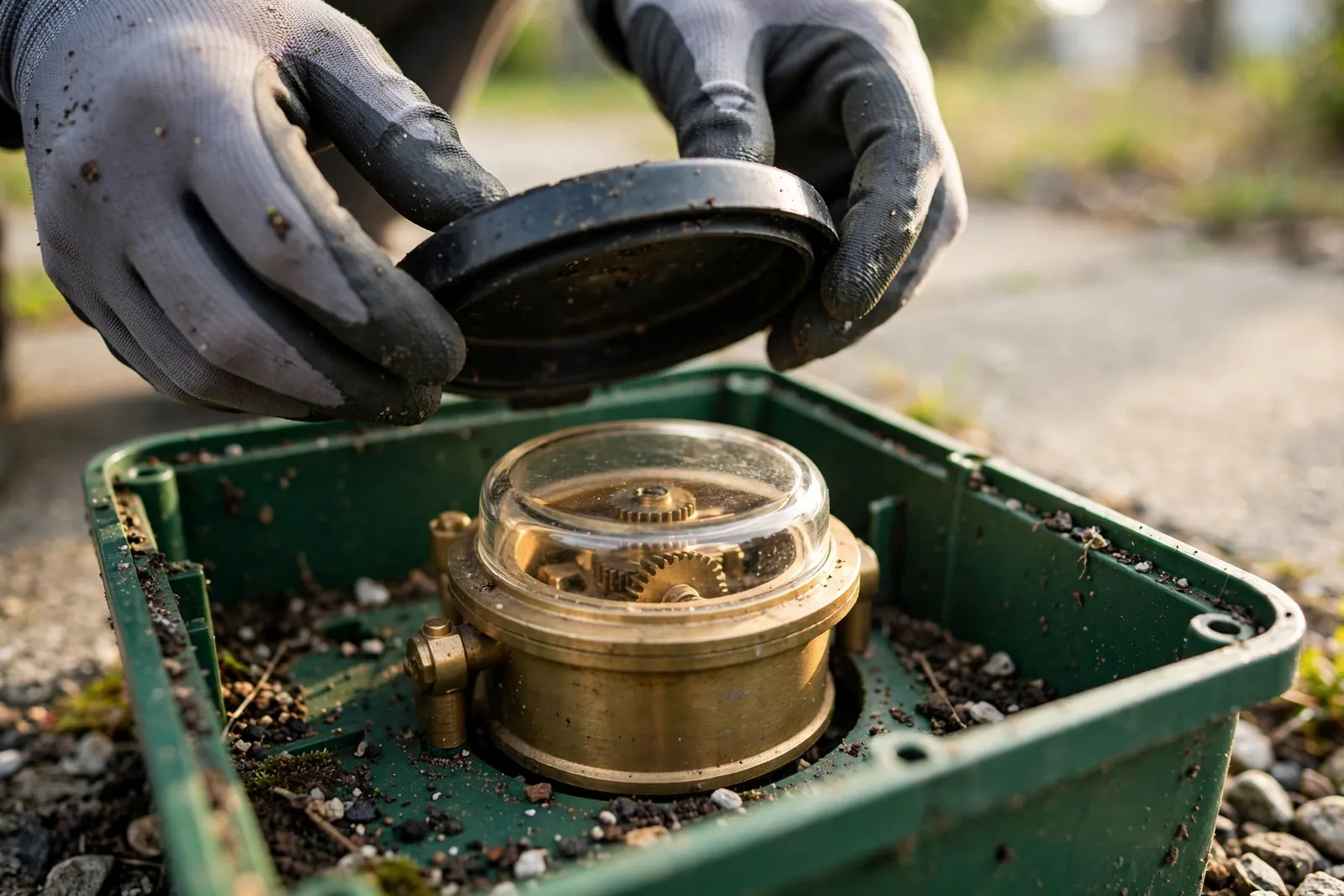
Start at the meter. The meter is the most honest diagnostic tool on the property. With every fixture off, a moving meter means water is leaving the system past the meter — and everything past the meter belongs to the homeowner. We isolate the house side, run a static pressure test, and watch: a steady pressure drop confirms the loss is on the service line, not a running toilet or a dripping hose bib.
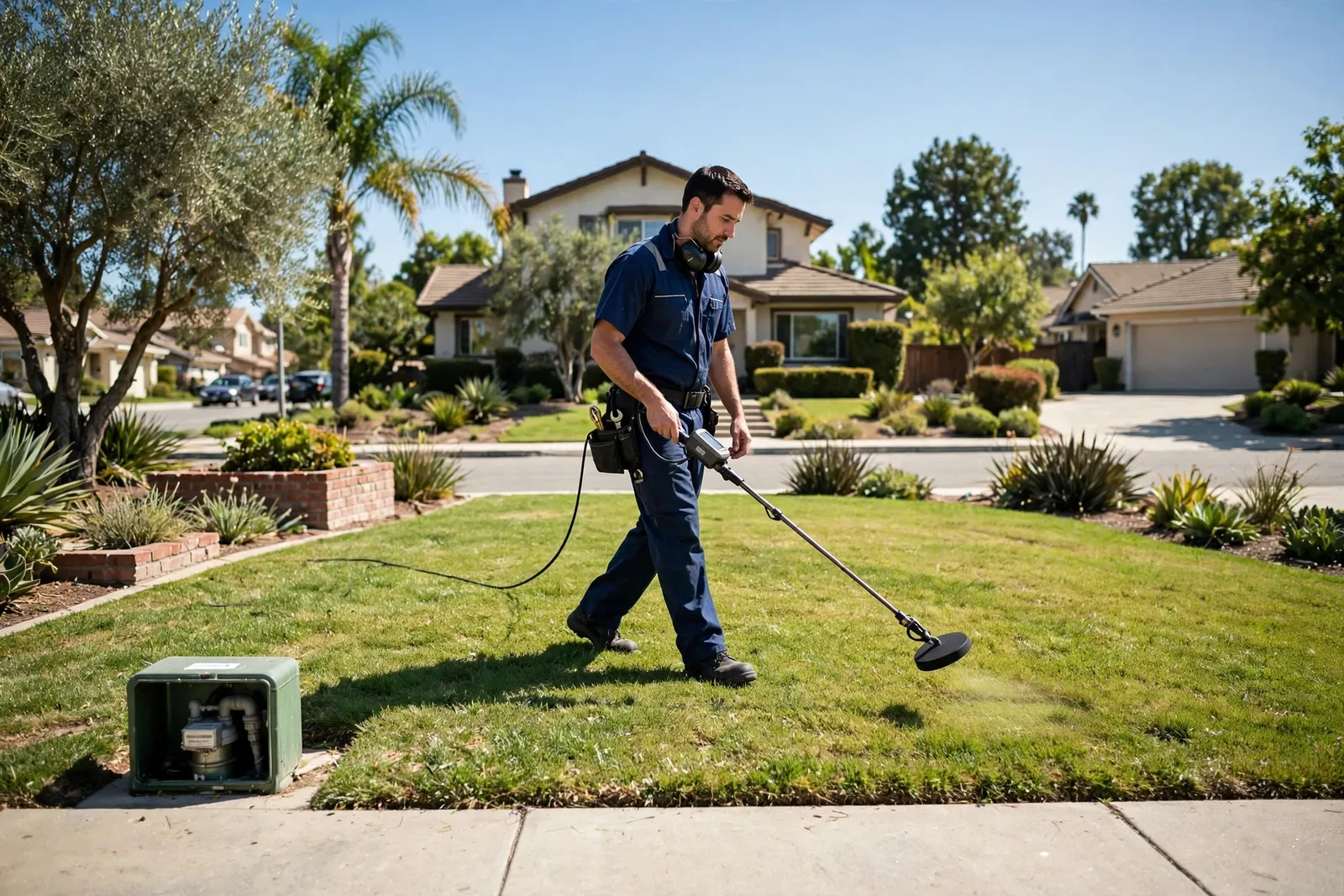
Then trace the line's path. From the meter toward the house, we follow the pipe's likely route with acoustic listening equipment. Pressurized water escaping through a break makes a distinct hiss, and it peaks right over the failure — often within inches. On long or deep runs we narrow it further by testing in sections, so the marked spot is the only ground that ever gets opened.
If the failure turns out to be under the slab rather than out in the yard, that is a different specialty — see our slab leak detection page. But nine times out of ten on a service-line call, the break is somewhere along that buried run between the meter and the foundation, and acoustic tracing walks us straight to it.
Why Whittier service lines fail the way they do: many Uptown homes predate the 1940s, and their galvanized steel service lines are typical of the era — interior corrosion has been narrowing them for decades. Under the yard, parts of Whittier sit on potentially expansive clay soils that shrink through the dry months and swell with winter rain, working buried joints loose a little every year. Any line installed before October 1987 already lived through severe shaking in the Whittier Narrows quake, an event documented to have broken water mains across the area. Add hard local water, typically 10–15 grains per gallon, scaling the pipe interior, and you get the full picture of why these lines let go.
Warning signs
Signs Your Main Water Line Is Leaking
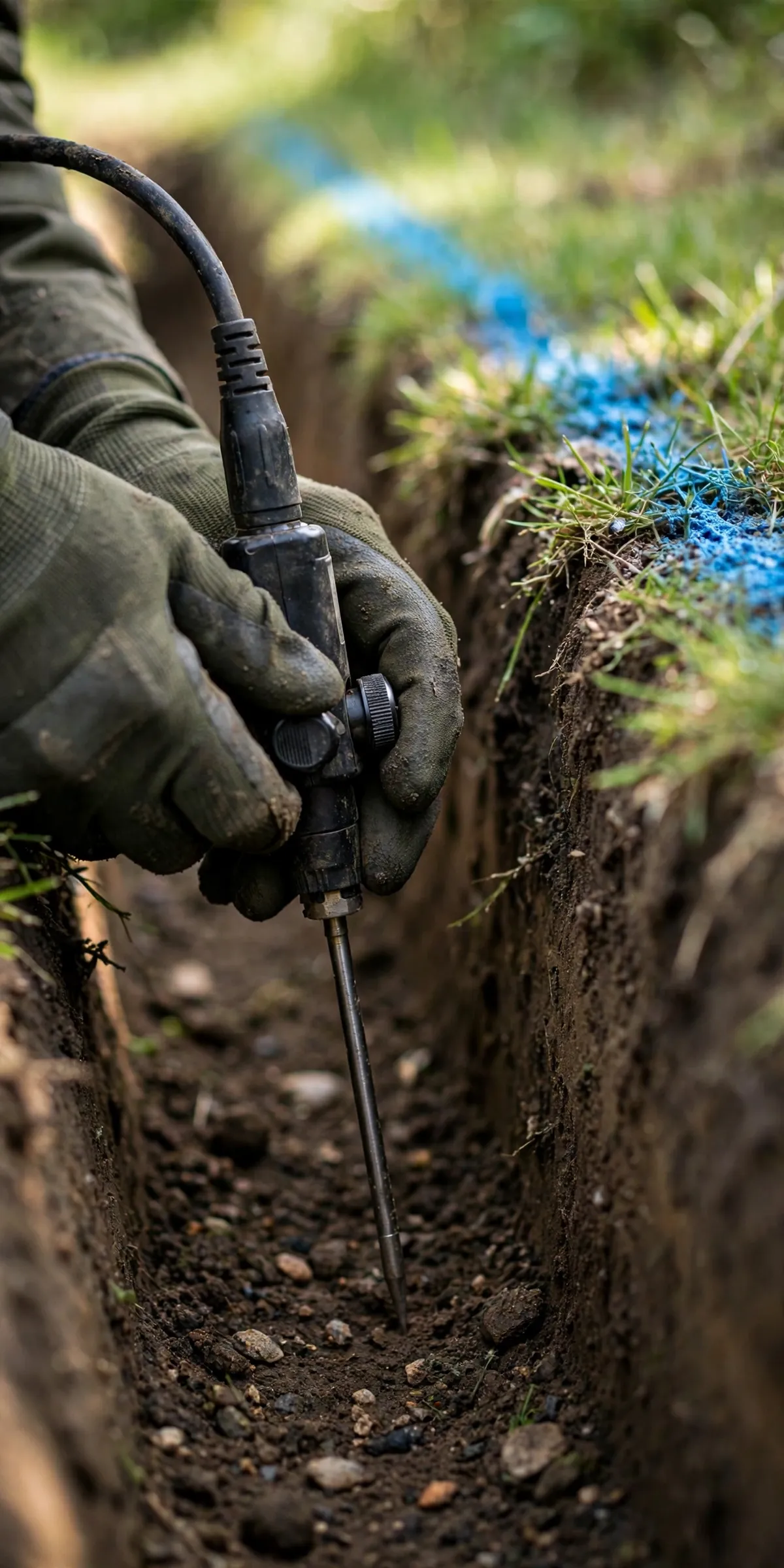
The meter test is the definitive check — but most homeowners notice the symptoms first. A main line leak announces itself in the yard, in the house's water pressure, or on the bill, sometimes all three at once.
Outside the house
- One strip of lawn grows faster and greener than the rest
- Soggy or sunken spots in the yard that never dry out
- Water surfacing near the sidewalk, driveway, or meter box
- Cracks or damp patches in concrete along the line's path
Inside the house and on the bill
- Water bill jumps with no change in usage
- Noticeable drop in water pressure at fixtures
- Water meter moves with everything in the house off
- Rusty or discolored water, especially after the line sits overnight
One caution: a high bill alone does not prove a service line leak — a running toilet or a stuck irrigation valve can do the same. That is why we always start with the meter test. Water coming up fast or flooding the yard, though, is past detective work — head straight to emergency leak repair.
Repair options
Repair the Section or Replace the Whole Line?
Finding the break is step one. Step two is deciding what to do with the pipe — and on an aging Whittier service line, that decision deserves real numbers, not a guess. Here is how the two paths compare.
Spot repair — when it fits
- Single clean break, rest of the line tests sound
- One accessible dig at the marked spot, pipe section replaced
- Lower upfront cost than a full replacement
- Usually completed in a single day
Full replacement — when it is time
- Galvanized line already corroded or narrowed throughout
- Repeat leaks on the same run — the next break is already forming
- New line sized right for the house, often with trenchless options
- Ends the cycle of patch-and-repeat on a dying pipe
Honest guidance: if the line is copper or plastic in good shape with one failure point, repair it — that is smart money. If it is a pre-1960s galvanized line that is already narrowed inside, the kind we pull out of Uptown yards regularly, we will show you the math on replacement, because the second leak is usually already forming. We run main-line calls across every Whittier neighborhood, and we price both options either way so you decide with real numbers.
Common questions
Water Line FAQs
Start with the meter test: turn off every fixture and appliance in the house, then watch your water meter. If the small leak-indicator triangle or dial is moving, water is flowing somewhere past the meter — and everything past the meter is your pipe, not the water company's. Visible clues include an unusually green strip of lawn, soggy spots that never dry, water surfacing near the sidewalk, or a bill that jumps with no change in usage.
The dividing line is the meter. Your water provider — Whittier is served by several purveyors, so check your water bill if you are not sure which one is yours — owns everything up to and including the meter. The buried service line from the meter to your house is the homeowner's responsibility, including the cost to find and fix a leak on it. That is exactly why the meter test matters: it proves which side of the line the problem is on.
Yes — digging is the last resort, not the method. We isolate the line at the meter, pressure-test it to confirm the loss, then trace the pipe's path with acoustic listening equipment. The hiss of escaping water peaks directly over the break, so we mark one spot instead of trenching the whole run. Digging only happens once, at the mark, for the repair.
Detection on a residential service line in the Whittier area typically runs $300–$700 depending on line length and how many methods are needed to pin it down. Repairs are quoted separately: a spot repair on an accessible section often falls in the $800–$2,500 range, while a full line replacement runs higher depending on length, depth, and whether we trench or go trenchless. You approve the price before any work starts.
It depends on the pipe's age and condition. A single clean break in an otherwise sound line is a good candidate for a spot repair. But if the line is galvanized steel from the pre-1960s era — common in Uptown Whittier homes — and already showing corrosion, patching one spot often just moves the next failure down the line. We pressure-test and inspect, then price both options so you can compare real numbers.
It depends on the material and the ground it sits in. Galvanized steel lines, typical in Whittier homes built before the 1960s, are often past their prime by now — interior corrosion narrows them from the inside out. Copper service lines last longer but still develop pinhole leaks after decades, especially with hard local water running 10–15 grains per gallon. Add in the annual shrink-swell of clay soil and the shaking older lines took in the 1987 quake, and age plus ground movement are what retire most service lines here.
Water Surfacing in the Yard? Find the Break First.
Do not trench the whole yard on a guess. Water line leak detection in Whittier — marked within inches, priced up front, documented for your records.